




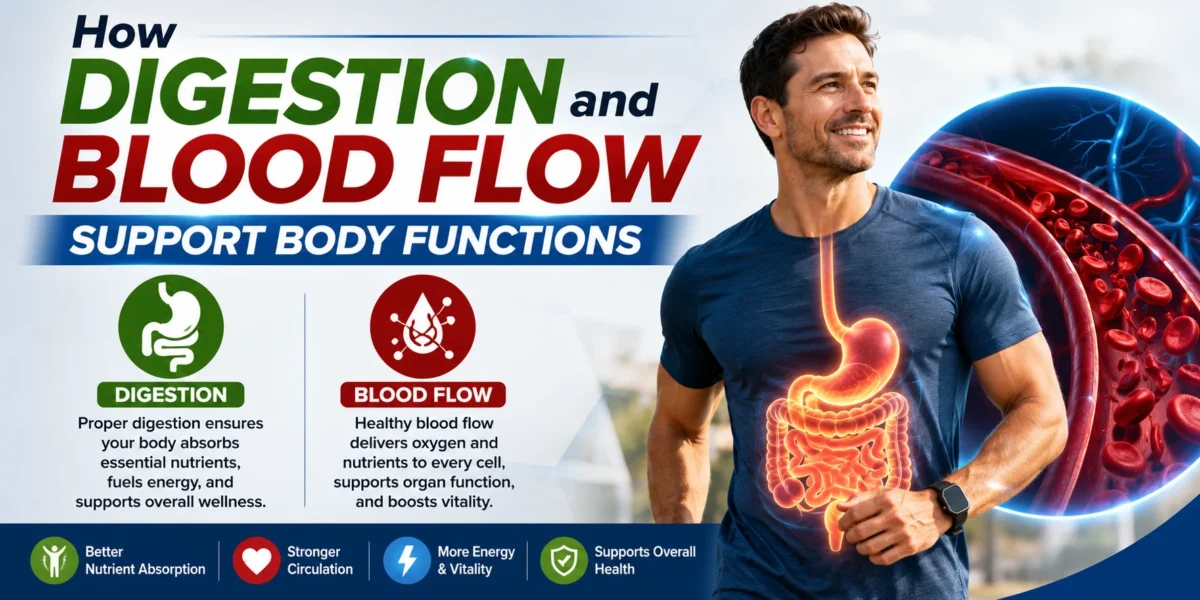
Think about the last meal you ate. Maybe it was a bowl of rice, a plate of eggs, or a quick sandwich between meetings. Within seconds of your first bite, two of the most powerful systems in your human body kicked into high gear — your digestive system and your circulatory system.
These two systems are not separate stories. They are chapters of the same book, written to keep you alive, energized, and functioning at your best. The digestive and circulatory system work in such close partnership that understanding one without the other is like trying to understand rainfall without clouds.
In this article, we are going to explore exactly how digestion and blood flow support body functions — not in dry, textbook language, but in a way that actually makes sense for everyday life. Whether you are curious about why you feel sluggish after a heavy meal, what happens when blood cannot reach your organs properly, or how your body turns a piece of bread into energy you can feel in your legs on a morning run, you are in the right place.
What Is the Digestive System and How Digestion Works
When most people think about digestion, they think about the stomach. That’s fair — the stomach does a lot of the heavy lifting. But the truth is, digestion begins the moment food enters your mouth and does not end until the final bits of waste leave your body, sometimes 24 to 72 hours later.
The Mouth: Where It All Begins
The process of how digestion works starts with chewing. Your teeth break down food into smaller pieces while your salivary glands release enzymes — particularly an enzyme called amylase — that begin breaking down carbohydrates right there in your mouth. This is why bread starts tasting slightly sweet the longer you chew it. Amylase is already converting starches into simple sugars.
Once you swallow, the chewed food (now called a bolus) travels down the esophagus through a series of muscular contractions called peristalsis. This wave-like motion pushes the bolus into the stomach.
The Stomach: The Great Mixer
Your stomach is a muscular bag that secretes powerful hydrochloric acid and digestive enzymes. This environment is so acidic that it would burn through most surfaces — yet your stomach lining is protected by a thick layer of mucus that regenerates constantly.
Here, food is churned into a semi-liquid paste called chyme. Proteins begin to break down through an enzyme called pepsin. Fat is largely untouched at this stage — it waits for the next station.
This process takes anywhere from 2 to 5 hours depending on what you ate. Fatty, protein-rich meals stay longer. Simple carbs move through faster.
The Small Intestine: The Nutrient Absorption Powerhouse
The small intestine is where the real magic of the digestive system and body functions happens. Stretching about 20 feet in most adults, this coiled tube is lined with millions of tiny finger-like projections called villi and microvilli. These dramatically increase the surface area available for absorbing nutrients — up to 250 square meters, roughly the size of a tennis court.
As chyme enters the small intestine, bile from the liver and digestive enzymes from the pancreas flood in to break down fats, carbohydrates, and proteins into their smallest usable forms — fatty acids, simple sugars, and amino acids.
These nutrients are then absorbed through the intestinal walls directly into the bloodstream or the lymphatic system. This is where digestion and blood flow become inseparable partners.
The Large Intestine: Water Reclamation and Waste
Whatever the small intestine could not absorb moves into the large intestine. Here, water and electrolytes are reabsorbed, and the remaining material is compacted into stool. The large intestine also hosts trillions of gut bacteria — your microbiome — which play a crucial role in immune function, vitamin production (especially vitamin K and B12), and even mental health through the gut-brain axis.
The Circulatory System: The Body’s Delivery Network
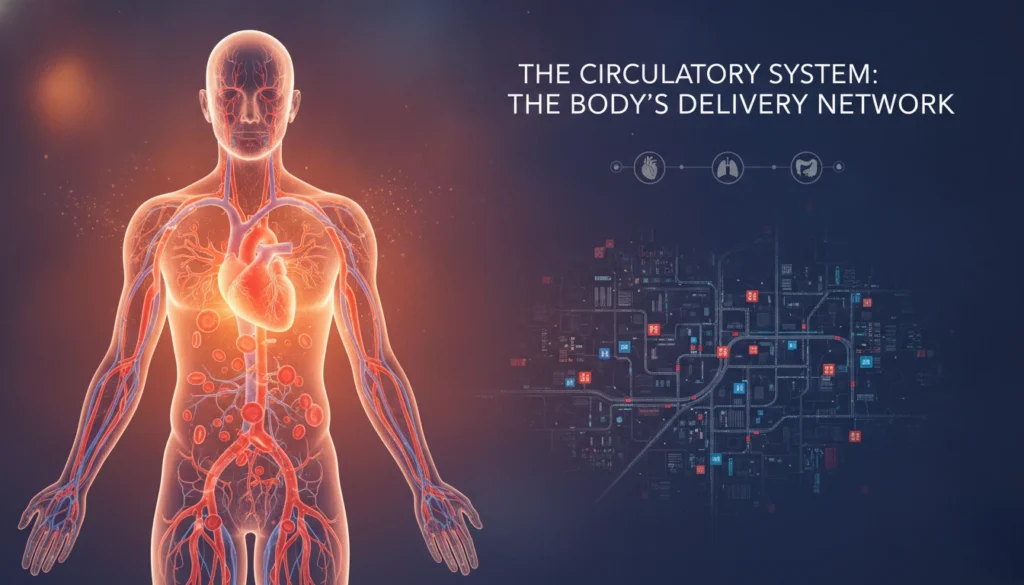
While the digestive system breaks food down and extracts nutrients, the circulatory system is the delivery service that takes those nutrients to every single cell in your body. It also carries oxygen from the lungs, removes carbon dioxide and waste products, regulates temperature, and moves hormones from one organ to another.
The Heart: Your Engine
At the center of the circulatory system functions is the heart — a fist-sized muscle that beats around 100,000 times a day without rest. Every beat pumps blood through an intricate network of arteries, veins, and capillaries that, if laid end to end, would stretch approximately 60,000 miles.
The heart has four chambers. The right side collects oxygen-depleted blood from the body and sends it to the lungs for fresh oxygen. The left side receives that oxygen-rich blood and pumps it out to the rest of the body under high pressure.
Blood: Much More Than Just Red Liquid
Blood is a complex fluid made up of plasma (about 55% of blood volume), red blood cells, white blood cells, and platelets. Each component has a job:
- Red blood cells carry oxygen via hemoglobin and transport carbon dioxide back to the lungs
- White blood cells are the immune defense system, attacking pathogens and foreign invaders
- Platelets help clot wounds to prevent excessive bleeding
- Plasma carries nutrients absorbed from digestion, hormones, proteins, and waste products
This means that blood is not just an oxygen highway — it is the primary vehicle through which digested nutrients travel from the small intestine to your liver, muscles, brain, and every other organ.
Arteries, Veins, and Capillaries
Arteries carry blood away from the heart to the rest of the body. They are thick-walled and muscular to withstand the pressure of each heartbeat. Veins carry blood back toward the heart and rely on valves to prevent backflow. Capillaries are the microscopic bridges between arteries and veins — they are so thin that red blood cells must pass through them single file. This thinness is intentional: it allows oxygen, nutrients, and waste to pass through capillary walls in both directions.
The Critical Connection: How Digestion and Blood Flow Work Together
Here is where things get genuinely fascinating. The digestive and circulatory system do not just coexist — they are biologically designed to coordinate with each other at every step.
The Portal Vein: The Liver’s Private Highway
After nutrients are absorbed in the small intestine, they do not go directly into general circulation. First, they travel through the hepatic portal vein to the liver. The liver acts as a filter and a processing center — it converts glucose into glycogen for storage, detoxifies harmful substances (including alcohol and medications), synthesizes proteins, and packages fats into lipoproteins for transport.
Only after the liver has processed these nutrients are they released into the general bloodstream and distributed throughout the body. This is why liver health is so deeply connected to digestive health and overall nutrition.
Increased Blood Flow During Digestion
When you eat a meal, your digestive system sends signals that redirect blood flow. Blood is diverted toward the stomach and intestines to support the absorption process — sometimes up to 30% of total cardiac output goes to the gastrointestinal tract after a large meal.
This is part of why you might feel drowsy or less mentally sharp after eating — the body is literally prioritizing blood in the gut over the brain temporarily. Exercise after a large meal can cause cramping for the same reason: your muscles and your gut are now competing for blood flow.
Oxygen Powers Digestion
Digestion is an energy-intensive process. The cells lining the stomach and intestines need a constant supply of oxygen to generate the energy needed to produce digestive enzymes, power peristalsis, and maintain the mucus barrier.
This oxygen arrives through blood flow. If circulation to the digestive system is impaired — as in conditions like mesenteric ischemia or severe heart failure — digestion becomes compromised. Nutrients stop being absorbed properly. The gut lining can break down. Inflammation follows.
The Role of Blood Flow in Supporting Every Body Function
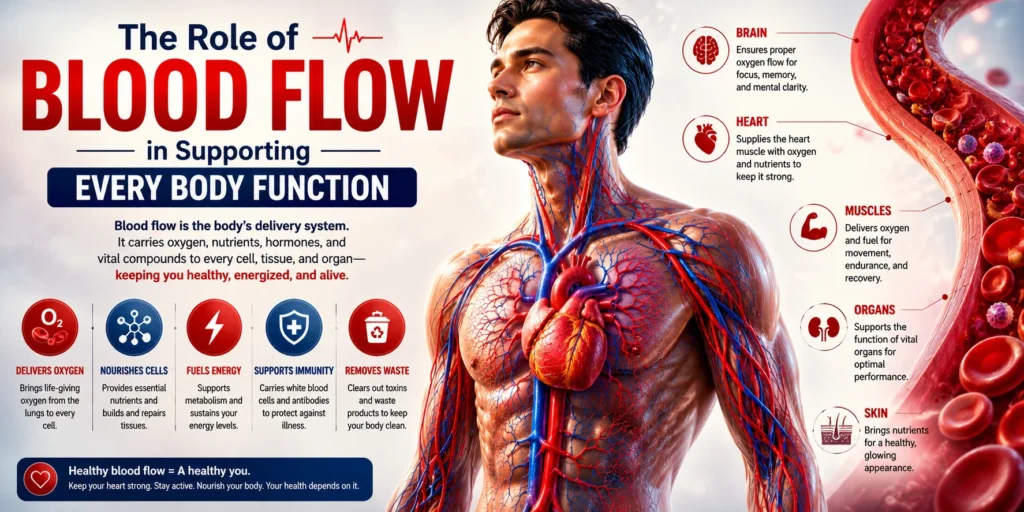
Understanding circulatory system functions helps explain why cardiovascular health affects nearly every aspect of human wellness.
The Brain Needs Constant Blood Supply
The brain accounts for about 2% of body weight but consumes approximately 20% of the body’s total oxygen and glucose. Unlike muscle cells, neurons cannot store energy — they depend entirely on an uninterrupted blood supply. Even a few seconds of interrupted blood flow can cause symptoms. A few minutes can cause irreversible damage.
The Kidneys Filter Blood Continuously
Your kidneys filter your entire blood volume about 40 times per day — roughly 200 liters. They regulate blood pressure, balance electrolytes, remove waste products, and produce hormones like erythropoietin (which stimulates red blood cell production). All of this depends on strong, consistent blood flow through the renal arteries.
Muscles and Blood Flow During Exercise
When muscles contract during exercise, they demand dramatically more oxygen and glucose. In response, the heart beats faster and harder, blood vessels in active muscles dilate, and blood is redirected from less urgent areas. This coordination between circulation and muscle function is what allows you to move, run, lift, and sustain physical effort.
Hormonal Transport
Hormones are chemical messengers produced by glands like the thyroid, adrenal glands, and pancreas. They travel through the bloodstream to reach their target organs. Insulin, for example, is released by the pancreas in response to rising blood glucose after a meal — it travels through the blood to signal cells to absorb glucose. Without proper blood flow, hormones cannot reach their destinations, and metabolic chaos follows.
What Happens When These Systems Fail
Digestive Disorders and Their Systemic Impact
When the digestive system and body functions break down, the consequences ripple outward:
- Malabsorption syndromes (like celiac disease or Crohn’s disease) prevent proper nutrient absorption, leading to deficiencies in iron, B12, calcium, and fat-soluble vitamins even in people who eat well
- Leaky gut syndrome (increased intestinal permeability) may allow bacterial fragments into the bloodstream, triggering chronic inflammation
- Gastroparesis (delayed gastric emptying) can cause blood sugar instability, malnutrition, and severe discomfort
- Irritable Bowel Syndrome (IBS) affects quality of life and is now understood to be linked to dysregulation in the gut-brain-immune axis
Circulatory Disorders and Digestive Consequences
Poor circulation directly undermines digestive health:
- Peripheral artery disease reduces blood flow to intestinal tissues, impairing nutrient absorption
- Congestive heart failure causes venous congestion in the gut, which can lead to malabsorption and a condition called cardiac cachexia
- Hypertension damages blood vessels throughout the body, including those supplying digestive organs
- Atherosclerosis in mesenteric arteries can cause intestinal angina — severe pain after eating due to insufficient blood flow during digestion
Case Study: How Gut Health Affected One Patient’s Cardiovascular Recovery
Patient Profile: 54-year-old male, history of type 2 diabetes and mild hypertension, presented with fatigue, poor digestion, and elevated inflammatory markers after a minor cardiac event.
Initial Assessment: Cardiologists initially focused solely on the heart, prescribing statins and blood pressure medication. Despite this, the patient’s inflammatory markers remained elevated and energy levels did not improve.
Discovery: A gastroenterologist found significant small intestinal bacterial overgrowth (SIBO) and evidence of leaky gut. Lipopolysaccharides — toxic fragments from gut bacteria — were entering the bloodstream and driving systemic inflammation, which was directly stressing the cardiovascular system.
Intervention: A combined approach was adopted:
- Antibiotic treatment for SIBO
- Anti-inflammatory diet (rich in omega-3s, fiber, and fermented foods)
- Probiotic therapy to restore the microbiome
- Gentle walking to improve both circulation and gut motility
Outcome: Within 16 weeks, the patient’s CRP (C-reactive protein, a marker of inflammation) dropped by 60%. Blood pressure stabilized. Energy returned. His cardiologist noted the cardiovascular improvement and credited the gut intervention as a major contributor.
Key Lesson: This case illustrates that the digestive and circulatory system are not isolated. Inflammation born in the gut can destabilize the heart, and improving gut health can directly support cardiovascular recovery.
Practical Tips to Support Both Digestion and Blood Flow
You do not need to overhaul your entire life to support these two vital systems. Small, consistent choices make a significant difference.
For Digestive Health
- Eat slowly and chew thoroughly — digestion starts in the mouth; rushing a meal means less enzyme activity
- Prioritize fiber from vegetables, legumes, and whole grains to feed your gut microbiome and support regular bowel movements
- Stay hydrated — water is essential for digestion, nutrient transport, and forming stool
- Limit ultra-processed foods — they disrupt the gut microbiome and promote intestinal inflammation
- Manage stress — the gut has its own nervous system (the enteric nervous system) and is highly sensitive to psychological stress
For Circulatory Health
- Exercise regularly — even 30 minutes of moderate walking daily significantly improves blood flow and cardiovascular function
- Quit smoking — smoking damages blood vessels and accelerates atherosclerosis
- Eat heart-healthy foods — omega-3 fatty acids, leafy greens, berries, and nuts all support vascular health
- Control blood pressure and blood sugar — both are major drivers of vascular damage when chronically elevated
- Sleep adequately — poor sleep is now recognized as a major cardiovascular risk factor
For Both Systems Together
- Don’t eat right before intense exercise — give digestion 1–2 hours before vigorous activity
- Include fermented foods — yogurt, kefir, kimchi, and sauerkraut support the microbiome which in turn reduces systemic inflammation
- Get regular checkups — both digestive conditions and cardiovascular issues are far easier to manage when caught early
The Gut-Heart Axis: Emerging Science
One of the most exciting areas of current research is the relationship between gut microbiome diversity and cardiovascular health. Studies have found that people with a more diverse gut microbiome tend to have lower rates of heart disease, lower blood pressure, and reduced arterial stiffness.
The mechanism appears to involve short-chain fatty acids (SCFAs) — metabolites produced by gut bacteria when they ferment dietary fiber. SCFAs have anti-inflammatory properties, help regulate blood pressure by acting on receptors in blood vessels and the kidneys, and support the integrity of the intestinal barrier.
Conversely, a microbiome dominated by harmful bacteria produces trimethylamine N-oxide (TMAO), a compound now strongly associated with increased risk of heart attack and stroke.
This field — sometimes called the gut-heart axis — is still evolving, but it reinforces one central truth: digestion and blood flow are not two separate health concerns. They are deeply intertwined pillars of the same system.
Frequently Asked Questions (FAQs)
Q1: How are digestion and blood flow connected?
After nutrients are absorbed in the small intestine, they enter the bloodstream through capillaries in the intestinal wall. The blood transports these nutrients first to the liver via the portal vein for processing, and then distributes them throughout the body. Without healthy blood flow, nutrients cannot reach cells even if digestion works perfectly.
Q2: How does the circulatory system support digestion?
The circulatory system delivers oxygen to digestive organs, which they need to generate energy for enzyme production, muscle contractions, and cell repair. Blood also removes waste products generated during digestion and transports hormones (like gastrin and secretin) that regulate digestive processes.
Q3: What happens to blood flow after eating?
After a meal, blood is redirected toward the gastrointestinal tract. The blood vessels supplying the stomach and intestines dilate, and cardiac output to that region increases by up to 30%. This is why strenuous exercise immediately after eating can cause discomfort.
Q4: Can poor circulation affect digestion?
Yes. Insufficient blood flow to the intestines can impair nutrient absorption, cause pain after eating (intestinal angina), and in severe cases lead to intestinal ischemia — a dangerous condition where gut tissue begins to die due to oxygen deprivation.
Q5: What foods support both the digestive and circulatory system?
Foods high in fiber (vegetables, legumes, whole grains), omega-3 fatty acids (fatty fish, flaxseed, walnuts), antioxidants (berries, leafy greens), and fermented foods (yogurt, kefir, kimchi) support both gut health and cardiovascular function. Limiting processed foods, excess salt, and saturated fats benefits both systems.
Q6: Is the gut connected to heart health?
Increasingly, yes. Research into the gut-heart axis shows that gut microbiome diversity is linked to cardiovascular outcomes. Gut bacteria metabolites like SCFAs can lower blood pressure, while harmful metabolites like TMAO are linked to higher risk of heart attack and stroke.
Q7: How long does digestion take?
The full digestive process — from eating to elimination — typically takes 24 to 72 hours. Stomach emptying takes 2 to 5 hours. The small intestine takes 2 to 6 hours to process food. The large intestine can take 10 to 59 hours to move material to elimination.
Q8: What is the role of the liver in both digestion and blood flow?
The liver serves as the gatekeeper between digestion and circulation. It processes absorbed nutrients, detoxifies substances, produces bile for fat digestion, synthesizes proteins carried by blood, and regulates blood glucose levels. It is the bridge between the two systems.
Conclusion
The human body is not a collection of independent parts — it is a deeply integrated network, and nowhere is that integration more evident than in the partnership between digestion and blood flow.
Your digestive system transforms the food you eat into the molecular building blocks of energy, growth, repair, and immune defense. Your circulatory system takes those building blocks and delivers them, along with oxygen, to the 37 trillion cells that make you who you are.
When these systems work well together, you feel it — in your energy, your mental clarity, your mood, your recovery from illness. When they struggle, the effects are equally systemic: fatigue, inflammation, nutrient deficiencies, and increased risk of chronic disease.
Understanding how the digestive and circulatory system function together — and what supports or undermines them — is one of the most practical investments you can make in your long-term health. Feed your gut well, keep your blood moving, and these two extraordinary systems will take care of far more than you realize.
Sources and References
The following reputable sources were consulted in the research and preparation of this article:
- National Institute of Diabetes and Digestive and Kidney Diseases (NIDDK) — Overview of the digestive system: https://www.niddk.nih.gov/health-information/digestive-diseases
- American Heart Association (AHA) — How the heart and circulatory system work: https://www.heart.org/en/health-topics/heart-attack/about-heart-attacks/how-the-heart-works
- Harvard T.H. Chan School of Public Health — The gut microbiome and health: https://www.hsph.harvard.edu/nutritionsource/microbiome/
- Mayo Clinic — Digestion: How long does it take?: https://www.mayoclinic.org/digestive-system/expert-answers/faq-20058340
- Cleveland Clinic — Circulatory system anatomy and function: https://my.clevelandclinic.org/health/body/21775-circulatory-system
- Johns Hopkins Medicine — The gut-brain connection: https://www.hopkinsmedicine.org/health/wellness-and-prevention/the-brain-gut-connection
- National Library of Medicine (PubMed) — TMAO, gut microbiota, and cardiovascular risk: https://pubmed.ncbi.nlm.nih.gov/
- World Health Organization (WHO) — Cardiovascular diseases overview: https://www.who.int/news-room/fact-sheets/detail/cardiovascular-diseases-(cvds)
- British Heart Foundation — Diet, digestion, and heart health: https://www.bhf.org.uk/informationsupport/heart-matters-magazine/nutrition
- American Gastroenterological Association (AGA) — Clinical guidelines and patient information: https://www.gastro.org/practice-guidance/gi-patient-center
Disclaimer
The information provided in this article is intended for general educational and informational purposes only. It is not a substitute for professional medical advice, diagnosis, or treatment. Always seek the guidance of a qualified healthcare provider — such as your doctor, a registered dietitian, or a specialist — with any questions you may have regarding a medical condition, digestive issue, cardiovascular concern, or health-related decision.
The case study presented in this article is illustrative and generalized. It does not represent a specific individual or constitute a medical endorsement of any treatment approach. Responses to dietary and lifestyle changes vary from person to person.

Other Articles

Does Excessive Sweating Speed Up Weight Loss?
12 Balanced Diet Secrets Most People Don’t Know