




If you’ve ever finished a tough workout drenched in sweat and thought, “I must have burned a ton of fat today,” you’re not alone. Millions of Americans believe that the more they sweating and weight loss, the more weight they lose. Walk into any gym across the country — from a CrossFit box in Austin, Texas, to a hot yoga studio in Brooklyn, New York — and you’ll see people in sauna suits, layering up in the heat, or cranking up the room temperature, all in the name of “sweating it out.”
But here’s the thing: that belief, while incredibly common, is based on a misunderstanding of how the human body actually works.
So let’s settle this once and for all. Does excessive sweating speed up weight loss? Does sweating burn fat? And what does the science — and real-life experience — actually tell us? Buckle up, because the truth is more nuanced than you think.
What Is Sweat, and Why Do We Sweat?
Before we dive into sweating and weight loss facts, let’s start at the very beginning. Sweat is your body’s cooling system. When your core temperature rises — whether from exercise, hot weather, stress, or illness — your sweat glands release a liquid made up primarily of water, sodium, chloride, potassium, and trace amounts of other minerals.
This liquid evaporates off your skin, which cools you down. It’s an incredibly efficient system that has kept humans alive through deserts, jungles, and grueling manual labor for thousands of years.
The average American has between 2 to 4 million sweat glands. Some people are naturally “heavy sweaters” due to genetics, fitness level, body weight, or medical conditions like hyperhidrosis (a condition where people sweat excessively even at rest). Others barely glisten during a hard run.
The key point here: sweating is a temperature regulation mechanism. It is not, by design, a fat-burning or calorie-burning process in itself.
Does Sweating Burn Calories?
This is one of the most common questions people ask, and the answer is: not directly.
Sweating and weight loss, itself does not burn a significant number of calories. The act of producing sweat requires very minimal energy. However — and this is the important nuance — the activities that cause you to sweat do burn calories.
When you’re running on a treadmill in Phoenix, Arizona in July, your body is burning calories to fuel your muscles. As a byproduct of that energy expenditure, your body heats up, and you sweat to cool down. The calorie burn comes from the exercise, not the sweat.
Think of it this way: if you sat in a sauna for 30 minutes and sweated profusely, you’d burn very few calories — maybe 30 to 50 more than you would sitting in a cool room. But you’d lose a lot of water weight. The moment you drink a glass of water, that number on the scale bounces right back.
The bottom line: Sweating is a symptom of calorie-burning activity, not the cause of it.
Does Sweating Help Lose Weight? The Water Weight Deception
Here’s where a lot of people get tricked. Step on the scale after a particularly sweaty workout and you might be down a pound or even two. Exciting, right?
Not so fast.
That weight loss is almost entirely water weight. Your body loses fluid through sweat, and since water has weight, you temporarily weigh less. But as soon as you rehydrate — which you should do, both for performance and health — that weight comes right back. It was never fat loss. It was never real, lasting weight loss.
This is actually a dangerous misunderstanding. Athletes who need to “make weight” for a sport (like wrestling or boxing) sometimes use sweat suits or saunas to drop water weight quickly. But this is a temporary, artificial measure that dehydrates the body and can be genuinely harmful if taken too far.
For the average American trying to lose weight and keep it off, chasing sweat as a marker of progress is a trap. The number on the scale after a sweaty session does not reflect your actual fat loss.
Does Sweating Burn Fat? Let’s Get Into the Science
This is perhaps the most important question of all: does sweating burn fat?
The short answer is no. Sweating does not directly burn fat. Here’s why.
Fat is burned through a process called lipolysis — your body breaks down stored fat (triglycerides) into fatty acids and glycerol, which are then used for energy. This process happens inside your cells and is driven by a calorie deficit: when you consume fewer calories than you burn, your body turns to fat stores for energy.
Sweat has nothing to do with this metabolic process. You can sweat a river and still gain fat if you’re eating more calories than you burn. And conversely, you can lose significant body fat through activities like strength training or moderate cycling without sweating and weight loss,heavily at all.
A 2012 study published in the journal Scientific American confirmed that fat is not “sweated out” of the body. Instead, when fat is metabolized, it’s converted into carbon dioxide (exhaled through your lungs) and water (expelled through urine, breath, and some through sweat). So technically, a tiny portion of broken-down fat exits through sweat — but the sweat itself is not doing the fat-burning work.
Case Study: Jake from Denver, Colorado
Let’s make this real with an actual-world example.
Jake, a 34-year-old marketing manager from Denver, Colorado, decided to get serious about losing weight. He was 215 pounds at 5’11” and wanted to get down to around 185. A friend told him that sweating and weight loss,more equals losing more fat, so Jake started wearing a sauna suit during his workouts, cranked the heat in his home gym, and started doing 20-minute sauna sessions after every workout.
After two weeks, Jake was excited — the scale showed he was down 6 pounds. But after a month, he started feeling fatigued, dizzy, and his performance at the gym had actually gotten worse. He was constantly dehydrated. He visited his doctor, who explained that Jake had been losing primarily water weight and was putting his kidneys and cardiovascular system under unnecessary strain.
His doctor put him on a different plan: a moderate calorie deficit (about 500 calories per day below maintenance), consistent strength training three days per week, and 45-minute cardio sessions on alternate days — without the sauna suit and at a comfortable room temperature.
Six months later, Jake had lost 27 pounds of actual fat. His performance improved. His energy levels were better. He sweated less, not more — because he was better hydrated and his cardiovascular fitness had improved. The lesson Jake learned: sweating was a red herring. The calorie deficit and consistent effort were doing the real work.
Does Sweating Burn Calories While Exercising?
Yes — but again, with an important asterisk. When you exercise, you burn calories. Period. The sweat that accompanies that exercise is just your body’s cooling system at work. The sweat does not add to your calorie burn; it is a response to the calorie-burning activity.
However, there is a small grain of truth here: exercising in heat causes your body to work harder to regulate temperature, which can marginally increase calorie burn. A 2014 study from the Journal of Strength and Conditioning Research found that exercising in warmer environments did increase heart rate and energy expenditure slightly compared to cooler temperatures. But the difference was modest — we’re talking maybe 5 to 10% more calories, not double or triple.
And that marginal increase comes with real risks: heat exhaustion, dehydration, reduced exercise performance, and in extreme cases, heat stroke. For most Americans who are simply trying to get healthy and lose weight, the risk-to-reward ratio of deliberately working out in excessive heat is not favorable.
How Many Calories Does Sweating Burn?
This is a question that gets searched constantly, and the answer might surprise you.
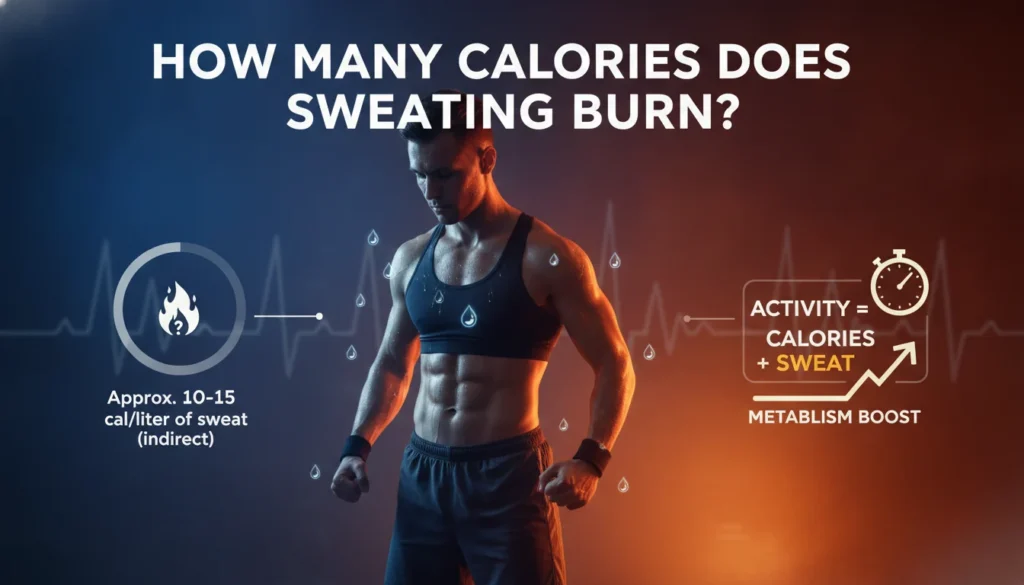
Sweating itself burns virtually no calories in isolation. However, the calorie burn associated with activities that cause sweating varies widely:
- A 150-pound person running at a moderate pace burns roughly 300–400 calories per hour.
- A 200-pound person doing high-intensity interval training (HIIT) burns roughly 500–800 calories per hour.
- A 150-pound person sitting in a sauna (sweating heavily but not exercising) burns only 30–60 additional calories per 30 minutes compared to sitting at room temperature.
As you can see, the dramatic calorie burn comes from the physical effort — the muscle contractions, the increased heart rate, the oxygen demand — not from the sweat itself.
If you’ve ever seen a calorie counter on a fitness tracker showing “calories burned” after a sweaty workout, those calories are being calculated based on your heart rate, movement, and body weight — not how much you sweated.
Does Sweating Burn Calories Without Exercise?
Occasionally, yes — but only in a trivial sense.
Your body burns a small number of extra calories when it regulates temperature, including when you sweat in the heat. But this is minor. Sitting outside on a hot day in Dallas, Texas, and sweating through your shirt is not a weight loss strategy. Your body will simply urge you to drink more water, which replenishes the fluid and associated electrolytes you lost.
There is also a condition called hyperhidrosis — excessive sweating and weight loss,unrelated to heat or exercise — that affects roughly 4.8% of Americans, according to the American Academy of Dermatology. People with this condition sweat heavily from their hands, feet, underarms, or face. Does this extra sweating help them lose weight? The evidence says no. Hyperhidrosis does not cause meaningful additional calorie burn.
The only scenario where sweating without exercise creates any weight-relevant effect is the temporary water weight loss mentioned earlier — which is not real fat loss and reverses immediately upon rehydration.
Sweating and Weight Loss Facts: What Actually Works
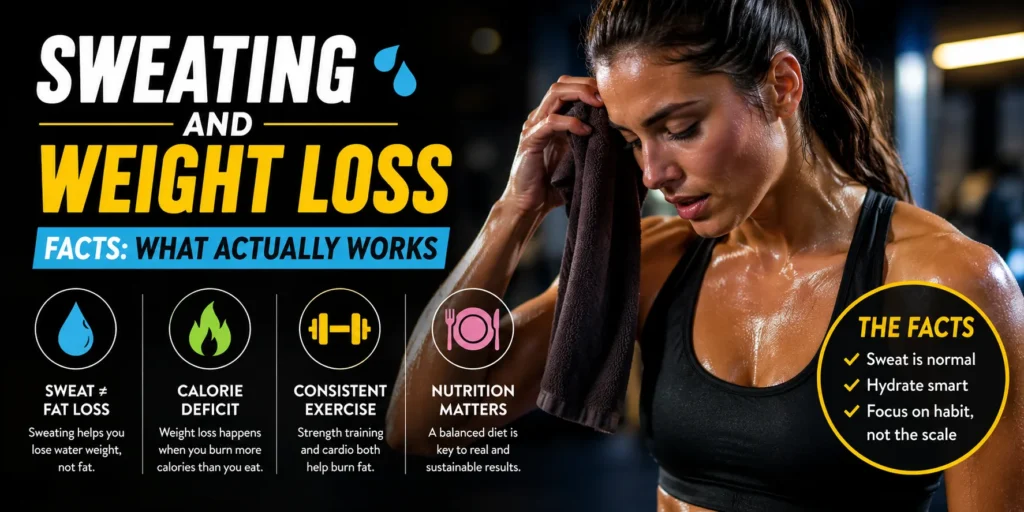
Since we’ve established that sweating itself is not the driver of weight loss, let’s talk about what the real levers are. These are the sweating and weight loss facts that actually matter:
1. Calorie Deficit Is King No matter what the fitness industry tells you, fat loss comes down to energy balance. To lose fat, you need to consistently burn more calories than you consume. The American Heart Association and the Mayo Clinic both agree that a deficit of 500–750 calories per day leads to approximately 1–1.5 pounds of fat loss per week — a sustainable, healthy rate.
2. Strength Training Preserves Muscle When you lose weight, you want to lose fat, not muscle. Strength training — weightlifting, resistance bands, bodyweight exercises — preserves and builds muscle tissue while you’re in a calorie deficit. More muscle means a higher resting metabolic rate, which means you burn more calories even at rest.
3. Cardiovascular Exercise Burns Calories Running, cycling, swimming, rowing — these activities burn significant calories and contribute to your daily energy deficit. They also happen to make most people sweat. But the sweat is the byproduct of effort, not the goal.
4. Hydration Is Critical Counterintuitively, drinking enough water supports weight loss. Proper hydration supports kidney function, helps you feel full, supports exercise performance, and keeps your metabolism running efficiently. Deliberately dehydrating yourself by sweating excessively is counterproductive.
5. Sleep and Stress Matter Chronic sleep deprivation and high stress raise cortisol levels, which promotes fat storage — especially around the belly. Americans average only 6.8 hours of sleep per night according to Gallup data, which is below the recommended 7–9 hours. Fixing sleep can dramatically support your weight loss efforts.
The Danger of Chasing Sweat as a Weight Loss Tool
There’s a real risk to the mindset that “more sweat = more weight loss.” It leads people to:
- Wear sauna suits during exercise, increasing risk of heat stroke
- Skip post-workout hydration to “preserve” the weight lost from sweat
- Judge their workout’s effectiveness by how much they sweat, not by actual effort or performance improvement
- Feel discouraged on days they don’t sweat much (like during strength training in a cool gym) even if the workout was highly effective
None of these behaviors help with sustainable fat loss, and some are genuinely dangerous. Heat stroke kills dozens of American athletes every year, many of whom were deliberately trying to sweat more for weight-related reasons.
Does Sweating in Specific Activities Help More?
Let’s compare a few common scenarios:
Hot Yoga: Practicing yoga in a room heated to 95–105°F (Bikram style) does cause significant sweating. A 2013 Colorado State University study found that hot yoga burned slightly more calories than room-temperature yoga — but only about 20% more. The bulk of the calorie burn still came from the physical movement, not the sweat. Hot yoga also provides some cardiovascular benefit, but the water weight loss it produces can mislead practitioners about actual fat loss.
Sauna Sessions: As noted, sauna use burns minimal extra calories. That said, recent research from the University of Eastern Finland suggests that regular sauna use (4–7 times per week) is associated with improved cardiovascular health. This could, over time, support your overall fitness and weight management — but indirectly, through heart health, not through sweating off fat.
HIIT Workouts: High-intensity interval training causes significant sweating because it pushes your heart rate up rapidly. The calorie burn from HIIT is genuinely high — and HIIT also causes an “afterburn effect” (excess post-exercise oxygen consumption, or EPOC) that keeps your metabolism elevated for hours after the workout. This is real, meaningful calorie burn. The sweat is just a side effect.
Frequently Asked Questions (FAQ)
Q.1 Does sweating burn belly fat?
No. Sweating does not specifically target belly fat or any other region of fat on your body. Spot reduction — the idea that you can burn fat from a specific body part by targeting that area — is a fitness myth. Fat loss happens systemically: your body decides where to pull fat from based on genetics, hormones, and overall calorie deficit. The only way to lose belly fat is to reduce your overall body fat percentage through a sustained calorie deficit, exercise, and healthy lifestyle habits. Sweating heavily around your midsection (from wearing a waist trainer, for example) will cause temporary water loss in that area, but no actual fat reduction.
Q.2 Does sweating burn water weight?
Yes — this is the one accurate thing about sweat and “weight loss.” Sweat is primarily water, and when you sweat heavily, you temporarily weigh less because you’ve expelled fluid. A hard 60-minute workout might cause you to lose anywhere from 0.5 to 2 liters of sweat, which equals approximately 1 to 4 pounds on the scale. However, this weight returns as soon as you rehydrate. It is not fat loss, not calorie-based weight loss, and not meaningful for long-term body composition change.
Q.3 Does sweating burn calories or fat?
Sweating itself burns neither significant calories nor fat. The activities that make you sweat — running, cycling, lifting, HIIT — burn calories. And a sustained calorie deficit burns fat over time. Sweat is simply how your body manages the heat generated during these activities. Think of sweat as the steam coming out of an engine, not the fuel being burned.
Q.4 How many calories does sweating burn?
Sweating in isolation (for example, sitting in a sauna) burns only about 30 to 60 extra calories per 30 minutes above your resting metabolic rate — a trivial amount. Exercise that causes sweating, however, can burn 300 to 800+ calories per hour depending on the activity, your body weight, and intensity. The calorie burn is from the exercise, not the sweat.
Q.5 Does sweating burn calories without exercise?
Technically, your body expends a tiny amount of extra energy when sweating due to temperature regulation, but this is negligibly small — not enough to contribute meaningfully to weight loss. Sitting in a hot room and sweating is not a calorie-burning strategy. The overwhelming majority of your daily calorie burn comes from your basal metabolic rate, physical activity, and the thermic effect of food.
Q.6 Does sweating burn calories?
Sweating does not directly burn calories in any meaningful amount. Calorie burn happens through muscular activity, increased heart rate, and elevated metabolic processes — all of which can cause sweating as a byproduct. So while sweating and calorie-burning often occur together during exercise, the sweat is not doing the work.
Q.7 Does sweating burn calories while exercising?
During exercise, your body burns calories to fuel movement. This generates heat, which triggers sweating to cool you down. So yes, you’re burning calories while sweating — but you’d burn roughly the same calories doing the same exercise in a cool environment. The sweat is a cooling mechanism, not an additional calorie-burning one. Some research suggests a marginal increase in calorie burn in hotter environments, but it’s modest and comes with dehydration risks.
Q.8 How many calories do you burn sweating for an hour?
If you mean sitting and sweating (like in a sauna) for an hour: roughly 50–100 additional calories above your normal resting burn — and this is highly variable based on your body size and the sauna temperature. If you mean vigorous exercise that causes sweating for an hour: you could burn anywhere from 400 to 900+ calories per hour, depending on your weight and workout intensity. Again, those calories come from the exercise effort, not from producing sweat.
Final Verdict: Does Excessive Sweating Speed Up Weight Loss?
The answer is a clear, science-backed no — at least not in the way most people hope.
Excessive sweating does not speed up real, lasting weight loss. It does not cause your body to burn more fat. It does not supercharge your calorie burn. What it does do is temporarily reduce water weight (which comes back with rehydration), potentially cause dehydration and electrolyte imbalances, and give you a false sense of how hard you worked.
The real drivers of weight loss remain consistent and boring: a calorie deficit, regular exercise (both strength training and cardio), adequate sleep, proper hydration, and stress management. These are not glamorous. They don’t leave you drenched in sweat after a sauna session. But they are what actually works — as Jake from Denver and millions of other Americans who’ve achieved and maintained healthy weight loss will tell you.
Don’t chase the sweat. Chase the habits.
Sources and References
- American Heart Association — Recommendations for physical activity and weight management: heart.org
- Mayo Clinic — “Weight loss: 6 strategies for success”: mayoclinic.org
- American Academy of Dermatology — “Hyperhidrosis: Overview”: aad.org
- Scientific American — “When You Burn Fat, Where Does It Go?” (2014): scientificamerican.com
- Journal of Strength and Conditioning Research — “Effect of Environmental Temperature on Metabolic Rate During Exercise” (2014): journals.lww.com
- Colorado State University — “Hot Yoga Study” (2013): colostate.edu
- University of Eastern Finland — “Sauna bathing and cardiovascular health” study (2018): uef.fi
- Gallup — “In U.S., 40% Get Less Than Recommended Amount of Sleep”: gallup.com
- National Institutes of Health (NIH) — “Dietary Guidelines and Energy Balance”: nih.gov
- Centers for Disease Control and Prevention (CDC) — “Physical Activity for a Healthy Weight”: cdc.gov

Other Articles

Blood Sugar Test Urine Strips: Features and Benefits
How Digestion and Blood Flow Support Body Functions