





If you’ve started progesterone therapy, birth control, or hormone replacement therapy (HRT) and noticed the number on the scale creeping up, you’re not imagining things — and you’re definitely not alone. “Does progesterone cause weight gain?” is one of the most searched questions among women navigating perimenopause, menopause, PCOS, fertility treatment, or PMS. In this guide, we’ll break down exactly what happens to your body on progesterone, separate real fat gain from bloating and water retention, and give you a practical, evidence-based roadmap for managing progesterone weight gain without giving up on a hormone that may be essential to your health.
Key Takeaways
- Progesterone itself does not directly cause significant fat gain — most of the “weight gain” people report is water retention, bloating, and increased appetite, not new body fat.
- Weight changes linked to progesterone are usually small (roughly 1–5 pounds) and often temporary.
- Low progesterone relative to estrogen (“estrogen dominance”) can also contribute to weight gain, so both high and low levels matter.
- Synthetic progestins (found in some birth control and older HRT formulations) are more commonly associated with weight-related side effects than bioidentical, micronized progesterone.
- Lifestyle factors — sleep, blood sugar, stress, and activity — heavily influence whether hormone-related appetite changes actually turn into fat gain.
- Talk to your doctor before stopping or adjusting progesterone therapy based on weight concerns alone.
What Is Progesterone, and Why Does It Matter?

Progesterone is one of the two primary female sex hormones, working alongside estrogen to regulate the menstrual cycle, support pregnancy, and maintain reproductive health. It’s produced mainly in the ovaries (specifically the corpus luteum) after ovulation, and in much larger amounts by the placenta during pregnancy. Smaller amounts are also produced by the adrenal glands in both women and men.
During the second half of the menstrual cycle — known as the luteal phase — progesterone rises to prepare the uterine lining for a possible pregnancy. If pregnancy doesn’t occur, progesterone weight gainlevels drop sharply, triggering menstruation. This natural rise and fall is also why so many women notice cyclical bloating, cravings, and mild weight fluctuations right before their period — a pattern often mistaken for long-term progesterone weight gain.
Progesterone is also used medically in several forms:
- Oral micronized progesterone (e.g., Prometrium) — often prescribed for menopause symptom relief, irregular periods, or to protect the uterine lining during estrogen therapy.
- Progesterone injections — used in fertility treatment and some HRT protocols.
- Vaginal progesterone gels or suppositories — common in IVF and early pregnancy support.
- Progestin-containing birth control — pills, IUDs, implants, and the injectable contraceptive, which use synthetic versions of progesterone.
- Bioidentical progesterone creams — used in some compounded hormone therapy regimens.
Understanding which type of progesterone you’re using matters, because natural, bioidentical progesterone and synthetic progestins do not behave identically in the body — a distinction we’ll return to throughout this article.
So, Can Progesterone Cause Weight Gain?
Here’s the short, honest answer: progesterone itself is unlikely to cause significant, lasting weight gain from increased body fat. Most major medical sources, including Cleveland Clinic, note that weight gain isn’t considered a direct side effect of progesterone on its own. What progesterone can do is influence the conditions that lead to weight fluctuations — appetite, water retention, blood sugar regulation, and sleep — which is why so many people genuinely feel heavier while using it.
Research on this topic is mixed. Some clinical trials show minimal changes on the scale — often just 1 to 3 pounds over several months — while other studies find no significant difference compared to a placebo. A large 2019 systematic review, for example, found no consistent link between synthetic progesterone and meaningful weight gain in women. At the same time, plenty of women using progesterone-containing birth control, fertility medication, or hormone replacement therapy report noticeable changes in how their clothes fit, even if the scale hasn’t moved dramatically.
The explanation for this apparent contradiction comes down to what’s actually happening physiologically:
1. Water Retention (Not Fat Gain)
Progesterone can cause the body to hold onto more sodium and fluid, leading to temporary bloating — especially in the first few weeks of starting progesterone therapy or during the luteal phase of a natural cycle. This kind of “weight gain” typically resolves within days to a few weeks as the body adjusts, and it’s not an increase in body fat at all.
2. Increased Appetite
Progesterone is associated with increased hunger, particularly for carbohydrate-rich foods. During the luteal phase, when progesterone peaks, women report eating more calories on average than during the follicular phase, when estrogen dominates and appetite is naturally suppressed. This appetite boost likely has an evolutionary basis — the body preparing extra energy stores in case of pregnancy. In today’s world, where food is abundant, that extra hunger can translate into eating more calories than you burn, which over time can lead to actual fat gain if left unmanaged.
3. Fat Redistribution, Not Fat Addition

Some research suggests progesterone promotes fat storage in the hips and thighs rather than the abdomen — a pattern generally considered healthier than abdominal fat. This redistribution can make clothes fit differently around the hips even when total body weight and fat percentage haven’t changed much, which contributes to the perception of progesterone weight gain even when the scale disagrees.
4. Sleep and Metabolic Knock-On Effects
Progesterone has natural sedative properties and can improve sleep for many women. But for a subset of users, it disrupts sleep instead, and poor sleep is strongly linked to increased appetite and weight gain through its effects on the hunger hormones ghrelin and leptin. In this way, progesterone can contribute to weight gain indirectly, through its effects on sleep quality rather than through a direct metabolic mechanism.
5. Individual Variability
Not everyone responds to progesterone the same way. Some people experience the opposite effect — reduced appetite or mild nausea that leads to eating less. This wide variation is part of why the research on hormone weight gain looks so inconsistent from study to study: averages can mask very different individual experiences.
Low Progesterone and Weight Gain: The Other Side of the Story
It’s not just high progesterone or progesterone therapy that can affect weight — low progesterone matters too. When progesterone is low relative to estrogen, a state often called “estrogen dominance,” the hormonal imbalance itself can drive weight-related symptoms, including bloating, fat storage (particularly around the abdomen), and a sluggish metabolism.
Progesterone also plays a supporting role in thyroid hormone activity. Since the thyroid regulates how efficiently your body uses energy, healthy progesterone levels indirectly support a normal metabolic rate. When progesterone is too low, some women notice they’re gaining weight despite eating and exercising the same as before — a frustrating pattern that’s often rooted in hormonal imbalance rather than lifestyle alone.
This is one of the key reasons doctors may prescribe progesterone therapy in the first place: not to cause weight gain, but to help correct an imbalance that may already be contributing to it.
Progesterone Side Effects:
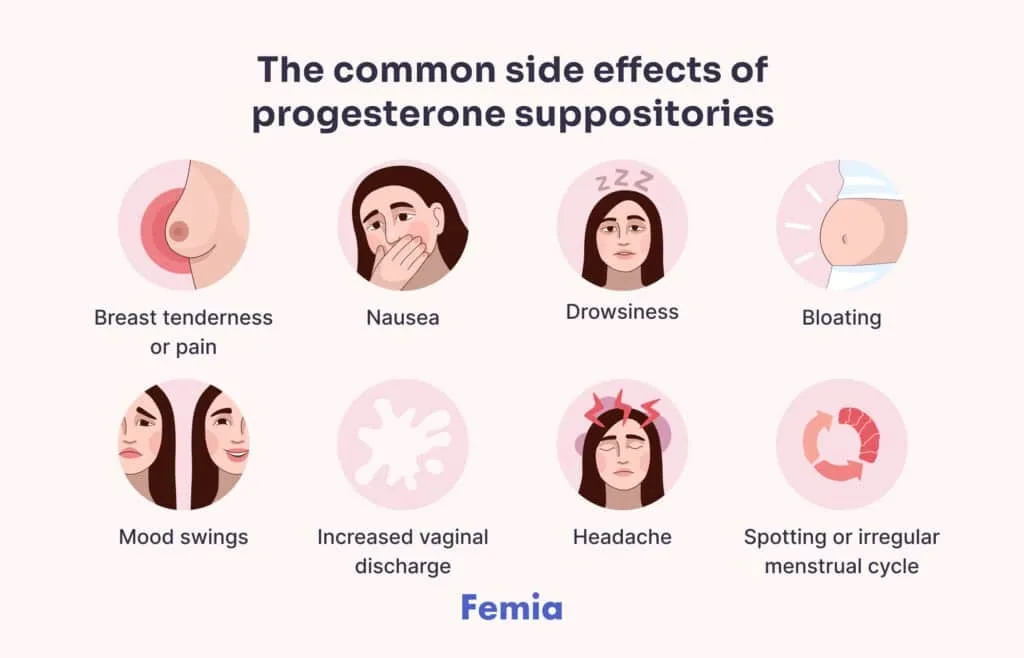
Weight-related changes are just one part of a broader side effect profile. Understanding the full list helps you tell the difference between an expected, manageable side effect and something worth calling your doctor about.
Common, generally mild side effects:
- Bloating and water retention
- Breast tenderness
- Fatigue or drowsiness (especially with oral micronized progesterone taken at night)
- Headaches
- Mood changes, including irritability or low mood
- Changes in appetite (increase or decrease)
- Lightheadedness
- Spotting or breakthrough bleeding
- Mild acne or skin changes
Less common but important to monitor:
- Significant mood changes or new depressive symptoms
- Marked changes in weight (increase or decrease)
- Cholestatic jaundice (yellowing of skin/eyes) — rare, but requires immediate medical attention
- Severe headaches or vision changes
- Signs of blood clots (leg swelling, chest pain, shortness of breath) — more relevant with combined estrogen-progestin products
Most side effects, including weight-related ones, tend to be dose-dependent and often improve within the first one to three months as your body adjusts to treatment. If side effects are severe or persistent beyond that window, it’s reasonable to ask your provider about adjusting the dose, form, or timing of your progesterone.
Bioidentical Progesterone vs. Synthetic Progestins: Does It Make a Difference?
One of the most important — and most overlooked — distinctions in this conversation is the difference between bioidentical (natural) progesterone and synthetic progestins.
Bioidentical progesterone is molecularly identical to the hormone your body produces naturally. It’s typically taken as an oral capsule, vaginal suppository, or cream. Because it matches your body’s own hormone structure, it tends to be processed more predictably and is associated with a milder side effect profile, including less pronounced weight-related symptoms.
Synthetic progestins, used in many birth control pills, hormonal IUDs, implants, and some older hormone replacement therapy regimens, are lab-made compounds designed to mimic progesterone’s effects. However, they don’t bind to hormone receptors in exactly the same way, which can produce a different — and sometimes more pronounced — side effect profile, including water retention, appetite changes, and mood effects in some users.
| Feature | Bioidentical Progesterone | Synthetic Progestins |
|---|---|---|
| Molecular structure | Identical to natural progesterone | Chemically modified, not identical |
| Common forms | Oral capsules, vaginal gel/suppository, cream, injections | Pills, IUDs, implants, injectable contraceptives |
| Typical use case | Menopause/HRT, luteal support, PMS, fertility treatment | Birth control, some HRT regimens, endometrial protection |
| Weight-related side effects | Generally mild, often water retention only | Reported more frequently by users, though evidence is mixed |
| Metabolism in the body | Processed via natural progesterone pathways | May have different receptor binding and metabolic effects |
| Regulatory status | FDA-approved bioidentical options exist (e.g., Prometrium); compounded versions are not FDA-regulated | FDA-approved and widely studied |
This doesn’t mean synthetic progestins are unsafe or wrong for you — for many people they’re highly effective and well tolerated. But if you’ve experienced significant progesterone side effects, including weight gain, on one form, it’s worth discussing whether switching to a different formulation might suit your body better.
Progesterone vs. Estrogen: Which Hormone Is Really Behind Your Weight Gain?
Because estrogen and progesterone work as a pair, it’s easy to blame the wrong hormone for weight changes — especially during perimenopause and menopause, when both hormones are shifting at once.
| Factor | Estrogen | Progesterone |
|---|---|---|
| Primary weight-related effect | Promotes fat storage, especially around the abdomen when levels drop | Increases appetite and water retention; may promote hip/thigh fat storage |
| Effect when levels are high | Can contribute to bloating, breast tenderness, fat gain | Bloating, fatigue, appetite increase |
| Effect when levels are low | Increased abdominal fat, slower metabolism (common in menopause) | Estrogen dominance symptoms, bloating, metabolic slowdown |
| Role in metabolism | Directly influences fat distribution and insulin sensitivity | Indirectly supports thyroid and metabolic function |
| Most affected life stage | Menopause, perimenopause | Luteal phase, pregnancy, PMS, HRT |
In many cases, it’s not progesterone alone but the ratio between estrogen and progesterone — along with broader metabolic shifts common in perimenopause and menopause — that best explains hormone weight gain. This is why an isolated blood test for progesterone often isn’t enough; a fuller hormone panel, evaluated by a healthcare provider, gives a clearer picture.
Pros and Cons of Progesterone Therapy (Weight-Focused View)
| Pros | Cons |
|---|---|
| Protects the uterine lining when combined with estrogen therapy | May cause temporary bloating and water retention |
| Can improve sleep quality for many users | Can disrupt sleep in a subset of users, indirectly promoting weight gain |
| Supports healthy thyroid and metabolic function when levels are balanced | May increase appetite, particularly for carbohydrates |
| Reduces PMS and perimenopausal symptoms that indirectly affect eating habits and stress-related weight gain | Weight-related side effects vary widely and are hard to predict individually |
| Available in bioidentical forms with a generally milder side effect profile | Synthetic progestin options may carry a stronger weight-related side effect profile |
| Essential for fertility treatment and early pregnancy support | Self-adjusting dose or stopping therapy without medical guidance can cause other health risks |
| Weight changes, when they occur, are usually modest (1–5 lbs) and often reversible | A small subset of users report more persistent weight changes requiring lifestyle or medication adjustments |
Case Study Snapshot: How Weight Changes Play Out in Real Life
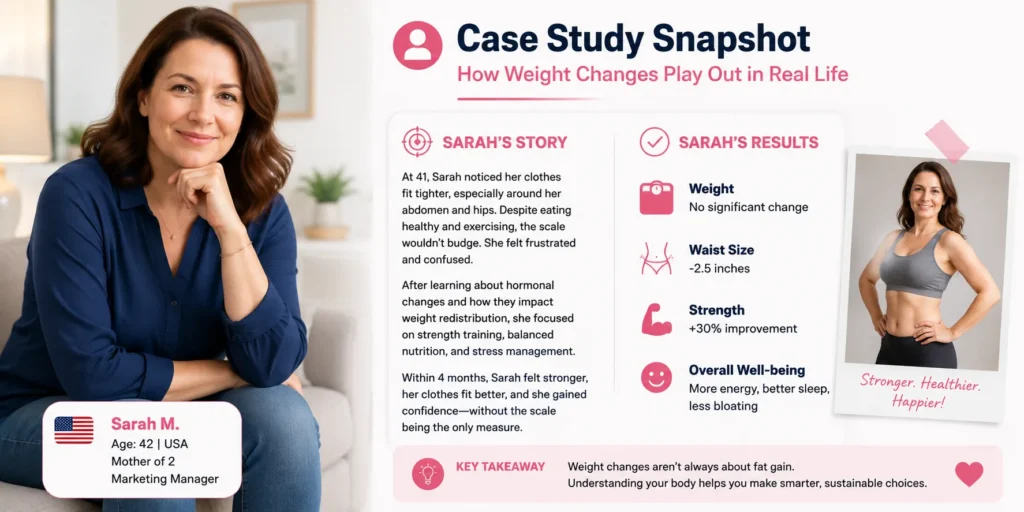
The following is an illustrative composite scenario based on patterns commonly reported in clinical literature and patient-reported outcomes in the U.S. — not a record of a specific individual.
Profile: A 47-year-old woman in Ohio began combined estrogen-progesterone HRT to manage perimenopausal hot flashes and irregular periods.
- Weeks 1–3: Noticeable bloating and a 2–3 lb increase on the scale, along with breast tenderness and mild fatigue — consistent with typical early water-retention effects of starting progesterone therapy.
- Weeks 4–8: Bloating largely resolved; weight stabilized close to her starting point. She noted increased appetite in the evenings, which she managed by prioritizing protein-rich dinners and consistent sleep.
- Month 3 onward: Hot flashes and night sweats improved significantly, sleep quality improved, and weight remained stable within about 2 lbs of her pre-treatment baseline. Her provider noted that most of the initial “weight gain” she experienced was fluid-related rather than fat gain, aligning with the broader clinical pattern seen in HRT users across the U.S.
This scenario mirrors a common real-world pattern reported in U.S. clinical settings: an initial, temporary bump on the scale in the first few weeks, followed by stabilization once the body adjusts — with lifestyle habits playing a major role in whether any lasting weight change occurs.
How to Manage Weight While on Progesterone
If you’re using progesterone therapy and want to minimize weight-related side effects, these evidence-informed strategies can help:
- Track patterns, not just the scale. Note bloating, appetite, sleep, and mood alongside your weight. This helps you and your doctor distinguish temporary water retention from a genuine upward trend.
- Prioritize protein and fiber. Both help manage the appetite increase associated with rising progesterone by improving satiety and stabilizing blood sugar.
- Watch sodium intake during bloating phases. Reducing high-sodium processed foods can ease water retention without requiring any change to your medication.
- Protect your sleep. Since disrupted sleep can amplify hunger hormones, a consistent sleep schedule helps blunt one of the indirect pathways linking progesterone to weight gain.
- Stay physically active. Regular movement — including strength training — supports metabolic rate and helps offset any appetite increase, while also improving mood and sleep quality.
- Time your dose thoughtfully. Oral micronized progesterone is often taken at night due to its sedative effect; discuss timing with your provider if fatigue or appetite changes are disruptive.
- Ask about formulation options. If synthetic progestins are causing pronounced side effects, ask your provider whether a bioidentical option is appropriate for your situation.
- Give it time before judging the effect. Many side effects, including weight-related ones, improve within one to three months as your body adapts.
- Rule out other causes. Thyroid issues, PCOS, insulin resistance, and lifestyle changes can all overlap with hormone therapy timelines. A full workup helps ensure progesterone isn’t unfairly taking the blame.
- Don’t stop therapy abruptly on your own. If weight gain is significant or distressing, talk to your healthcare provider about adjusting rather than discontinuing treatment without guidance, especially if progesterone is protecting your uterine lining or supporting a pregnancy.
When to Talk to Your Doctor
Reach out to your healthcare provider if you experience:
- Weight gain that continues to climb beyond the first 2–3 months of therapy
- Weight gain accompanied by swelling, shortness of breath, or chest pain
- Significant mood changes, including new or worsening depression
- Yellowing of the skin or eyes
- Severe or persistent headaches
- Any side effect that feels disproportionate or unmanageable
A quick blood test can check your progesterone (and often estrogen) levels and help determine whether your weight changes are hormone-related, lifestyle-related, or due to an unrelated medical condition.
Frequently Asked Questions
Q.1 Does progesterone cause weight gain, or is it just bloating?
For most people, what feels like weight gain on progesterone is primarily water retention and bloating rather than an increase in body fat. True fat gain is possible if increased appetite leads to a sustained calorie surplus over time, but it’s not a direct, guaranteed effect of the hormone itself.
Q.2 How much weight gain is normal when starting progesterone?
Most studies and clinical reports describe modest changes, typically in the 1 to 5 pound range, often resolving as the body adjusts over the first one to three months.
Q.3 Does low progesterone cause weight gain too?
Yes. Low progesterone relative to estrogen can contribute to bloating, abdominal fat storage, and a slower metabolism, sometimes described as “estrogen dominance.”
Q.4 Is bioidentical progesterone less likely to cause weight gain than synthetic progestins?
Generally, yes. Bioidentical progesterone tends to have a milder side effect profile, though individual responses vary and synthetic progestins work well for many people without significant weight issues.
Q.5 Will stopping progesterone reverse the weight gain?
If the weight gain was primarily water retention, it typically resolves fairly quickly after stopping. If it was related to sustained increased appetite and calorie intake, reversing it will depend on adjusting those lifestyle factors as well.
Q.6 Can progesterone cause weight loss instead?
Yes, for some individuals. Progesterone can cause nausea or appetite suppression, leading to mild weight loss rather than gain — another example of the significant individual variability seen with this hormone.
Q.7 Does progesterone affect where fat is stored on the body?
Some evidence suggests progesterone favors fat storage in the hips and thighs rather than the abdomen, a distribution pattern generally considered more metabolically favorable than abdominal fat.
Q.8 Is it safe to take progesterone with weight-loss medications like GLP-1 drugs?
Combining progesterone with GLP-1 medications is generally considered safe and is commonly done under medical supervision, but you should always confirm this with your prescribing provider given your individual health history.
Q.9 Can progesterone therapy help with weight management during menopause?
Indirectly, yes. By improving sleep, reducing hot flashes, and helping balance estrogen dominance, progesterone therapy can support conditions that make weight management easier during perimenopause and menopause, even though it isn’t a weight-loss treatment itself.
Q.10 How long do progesterone side effects, including weight gain, typically last?
Most side effects peak in the first few weeks and improve significantly within one to three months as your body adapts to the new hormone levels.
The Bottom Line
The honest, evidence-based answer to “can progesterone cause weight gain” is: rarely in a major, direct way — but yes, indirectly, through bloating, appetite changes, sleep effects, and individual sensitivity. For most people using progesterone therapy, weight changes are modest, temporary, and manageable with a few lifestyle adjustments. Understanding the difference between water weight and true fat gain — and knowing when low progesterone, not high, might be the real culprit — puts you in a much stronger position to work with your doctor and get the benefits of hormone therapy without unnecessary frustration on the scale.
If weight changes persist, feel severe, or come with other concerning symptoms, don’t self-diagnose or stop treatment on your own — a healthcare provider can run the right tests, review your specific formulation and dose, and help you find an approach that supports both your hormonal health and your weight goals.
References and Sources
- Cleveland Clinic. Progesterone: Natural Function, Levels & Side Effects. my.clevelandclinic.org/health/body/24562-progesterone
- Cleveland Clinic. Progestin: Birth Control, How It Works & Side Effects. my.clevelandclinic.org/health/treatments/24838-progestin
- Cleveland Clinic. Progesterone (Prometrium): Uses & Side Effects. my.clevelandclinic.org/health/drugs/19484-progesterone-capsules
- Cleveland Clinic. Bioidentical Hormones: Therapy, Uses, Safety & Side Effects. my.clevelandclinic.org/health/treatments/15660-bioidentical-hormones
- Mayo Clinic. Progesterone (oral route) – Side effects & dosage. mayoclinic.org/drugs-supplements/progesterone-oral-route/description/drg-20075298
- Mayo Clinic. Estradiol and progesterone (oral route) – Side effects & dosage. mayoclinic.org/drugs-supplements/estradiol-and-progesterone-oral-route/description/drg-20452213
- Take Care by Hers. Does Progesterone Cause Weight Gain? What to Know. forhers.com/blog/does-progesterone-cause-weight-gain
- Ro. Does Progesterone Cause Weight Gain? ro.co/weight-loss/does-progesterone-cause-weight-gain
- Aspect Health. Does Progesterone Cause Weight Gain? What You Need to Know. aspect-health.com/blog/does-progesterone-cause-weight-gain-what-you-need-to-know
- Proov. Does Progesterone Cause Weight Gain? Hormonal Side Effects of Low Progesterone. proovtest.com/blogs/blog/does-progesterone-cause-weight-gain
- Inito. Does Progesterone Cause Weight Gain? blog.inito.com/progesterone-cause-weight-gain

Other Articles

Which Is More Dangerous: Blood Sugar vs Urine Sugar?