





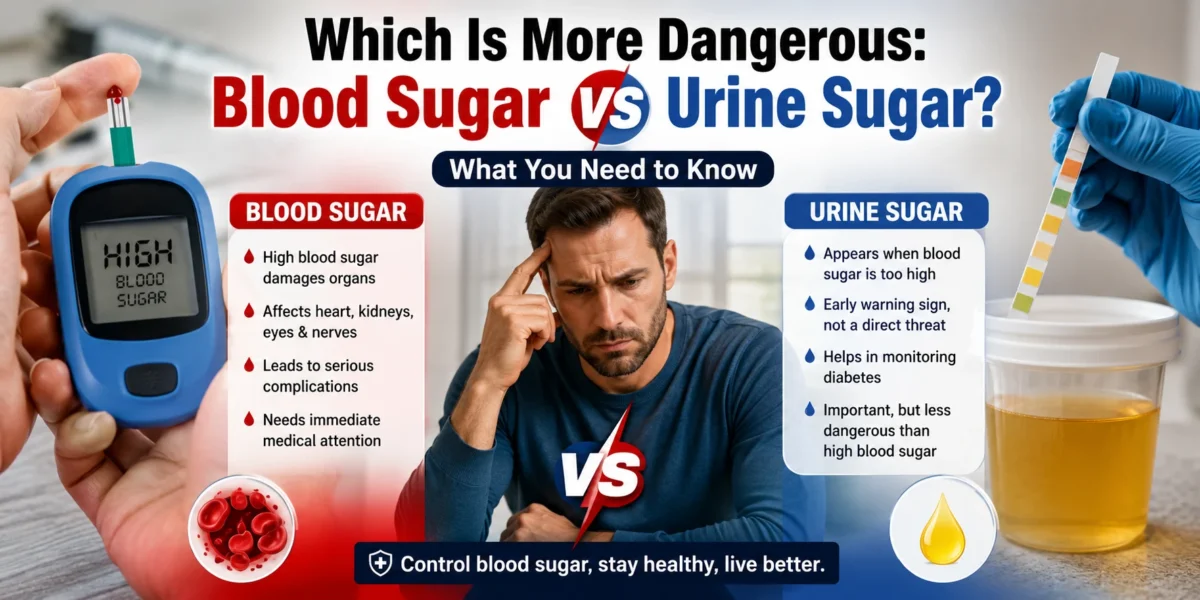
If you’ve ever received a lab report showing both blood sugar and urine sugar results, you may have wondered what they actually mean and which one matters more. It’s a common question, especially for people monitoring diabetes or checking their glucose levels for the first time. Understanding Blood Sugar vs Urine Sugar can help you interpret your test results more accurately, recognize potential health risks, and know when it’s important to seek medical advice.: is high blood sugar more dangerous than high urine sugar, or are they basically the same thing?
Short answer: they’re related, but they are not the same danger. Blood sugar is the real-time, direct measurement of glucose in your bloodstream, and it’s the number that actually damages your organs when it stays high. Urine sugar (glucose in urine, sometimes called glycosuria) is more like an “echo” — it only shows up after your blood sugar has already been high enough, for long enough, to spill over into your kidneys and out through your urine. By the time sugar shows up in your urine, your blood sugar has usually already been elevated for hours.
Blood Sugar Is More Dangerous Than Urine Sugar
Before we go deep, here’s the bottom line up front, since that’s what most people are really searching for:
High blood sugar is the more dangerous and more clinically important measurement. It is the direct cause of long-term damage to your eyes, kidneys, nerves, and heart. Urine sugar is simply a delayed side-effect of blood sugar being too high — it’s a symptom, not the root problem. That’s why every major health authority, including the American Diabetes Association (ADA), the CDC, and MedlinePlus (a service of the U.S. National Library of Medicine), relies primarily on blood tests to diagnose and manage diabetes, and treats urine glucose testing as an outdated or backup method.
That said, urine sugar isn’t meaningless. When ketones show up in urine along with glucose, it can signal a dangerous condition called diabetic ketoacidosis (DKA), which is a medical emergency. So while blood sugar is the more important number day-to-day, urine testing still has a role in specific emergency and screening situations.
What Is Blood Sugar? (The Real-Time Signal)
Blood sugar, or blood glucose, is the amount of glucose circulating in your bloodstream at any given moment. Glucose comes from the food you eat — mainly carbohydrates — and it’s your body’s main source of fuel. Insulin, a hormone made by your pancreas, helps move glucose out of your blood and into your cells so it can be used for energy.
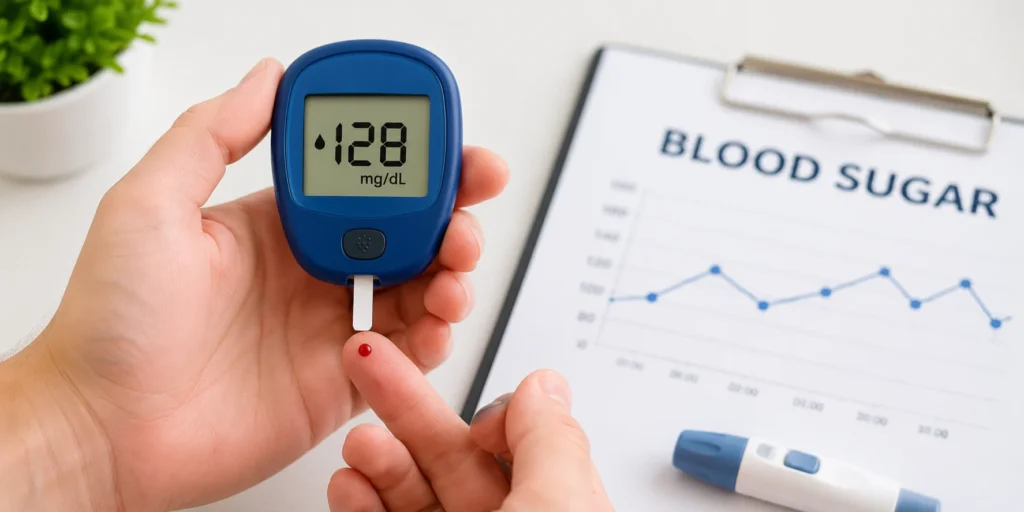
When this system works properly, your blood sugar stays in a fairly tight, healthy range. When it doesn’t — because of insulin resistance (common in type 2 diabetes) or lack of insulin production (common in type 1 diabetes) — glucose builds up in the blood instead of being absorbed by your cells.
Normal Blood Sugar Ranges
| Test Type | Normal Range | Prediabetes | Diabetes |
|---|---|---|---|
| Fasting blood sugar | Below 100 mg/dL | 100–125 mg/dL | 126 mg/dL or higher |
| 2-hour after eating (postprandial) | Below 140 mg/dL | 140–199 mg/dL | 200 mg/dL or higher |
| Random blood sugar | Below 140 mg/dL | — | 200 mg/dL or higher (with symptoms) |
| HbA1c (3-month average) | Below 5.7% | 5.7%–6.4% | 6.5% or higher |
(These figures are general reference ranges commonly used by U.S. clinical labs. Always confirm your personal target range with your doctor, since ranges can shift slightly based on age, pregnancy, and other health conditions.)
Blood sugar testing methods include:
- Fingerstick glucose meters – a quick drop of blood tested at home
- Continuous glucose monitors (CGMs) – small sensors worn on the skin that track glucose all day and night
- Fasting plasma glucose (FPG) test – a lab blood draw after not eating for 8+ hours
- Oral glucose tolerance test (OGTT) – blood drawn before and after drinking a sugary solution
- HbA1c test – measures your average blood sugar over the past 2–3 months
Because blood glucose testing gives an immediate, accurate picture, it’s considered the gold standard for diagnosing and managing diabetes.
What Is Urine Sugar? (The Delayed Echo)

Urine sugar, or glucose in urine, happens when your kidneys can no longer reabsorb all the glucose passing through them. Normally, your kidneys filter blood and send glucose back into your bloodstream instead of letting it pass into urine. But once blood glucose rises above a certain point — usually somewhere around 180 mg/dL, known as the “renal threshold” — the kidneys get overwhelmed and start letting glucose spill into the urine.
This is important: urine sugar doesn’t reflect what your blood sugar is right now. According to MedlinePlus, a urine glucose test actually reflects a blood sugar spike from several hours earlier, not the present moment. So if you test your urine and it comes back clean, that does not necessarily mean your blood sugar is fine right now — it could just mean your last spike wasn’t high enough or long enough to spill over, or it might simply be testing an outdated reading.
How Urine Sugar Testing Works
- A test strip is dipped into a urine sample or held under a urine stream.
- The strip changes color depending on the concentration of glucose.
- The color is compared to a reference chart to estimate the glucose level (trace, low, moderate, high).
Urine glucose tests are cheap, painless, and don’t require a needle — which is why they were widely used decades ago, before affordable blood glucose meters existed. But accuracy is their biggest weakness.
Blood Sugar vs Urine Sugar: Full Comparison Table
| Feature | Blood Sugar Test | Urine Sugar Test |
|---|---|---|
| What it measures | Glucose currently in your bloodstream | Glucose that has already spilled from kidneys into urine |
| Timing/accuracy | Real-time, immediate reading | Delayed by several hours; reflects past spikes |
| Clinical accuracy | High — considered the gold standard | Lower — affected by hydration, medication, kidney function |
| Used to diagnose diabetes? | Yes, primary method | No, not on its own |
| Cost | Low to moderate (meters, strips, lab tests) | Very low (simple dipstick strips) |
| Invasiveness | Requires a small blood sample (fingerstick or draw) | Non-invasive, no needle |
| Detects ketones (DKA risk)? | Blood ketone tests exist but are less common | Yes, standard urine ketone strips are common and useful |
| Best used for | Daily monitoring, diagnosis, insulin dosing decisions | Backup screening, ketone checks, situations where blood draws aren’t possible |
| Danger level if abnormal | High — direct marker of organ-damaging glucose levels | Moderate — a warning sign that blood sugar was already high |
| Recommended by ADA/CDC as primary test? | Yes | No — used only as a supplemental tool |
Why Blood Sugar Is Considered More Dangerous
1. It’s the Direct Cause of Organ Damage
Every complication linked to diabetes — nerve damage (neuropathy), kidney disease (nephropathy), eye damage (retinopathy), and heart disease — is driven by chronically high blood glucose, not urine glucose. High blood sugar damages blood vessels and nerves over time, and this damage happens regardless of whether any of that sugar ever shows up in your urine.
2. Urine Sugar Can Miss Early Danger
Because urine sugar only appears once blood glucose crosses the kidney’s reabsorption threshold (roughly 180 mg/dL for most people), someone could have blood sugar in the 140–170 mg/dL range — high enough to be prediabetic or diabetic — and still show a completely normal, sugar-free urine test. This is a big reason medical organizations moved away from urine testing as a screening tool: it simply misses a large window of early, dangerous elevation.
3. Kidney Health Changes the Picture

In some people, especially those with kidney disease, the reabsorption threshold shifts. A person with kidney damage might show glucose in their urine even when their blood sugar is normal (a rare condition called renal glycosuria) — or they might not show sugar in urine even when blood sugar is dangerously high, because their kidneys are too damaged to filter properly. This unpredictability is exactly why NIH-published research notes urine testing is useful only as a supplemental screening tool, not a diagnostic one.
4. Hydration and Medication Distort Urine Results
Drinking a lot of water can dilute urine and make glucose levels look artificially low. Certain medications, vitamin C supplements, and even some fruits can cause false positives or false negatives on urine strips. Blood tests are far less susceptible to this kind of interference.
Where Urine Sugar Testing Still Matters
Urine testing isn’t obsolete — it still plays an important supporting role in a few specific situations:
- Ketone monitoring in Type 1 diabetes: When blood sugar gets extremely high, the body may start breaking down fat for energy, producing ketones. High ketones plus high glucose in urine can signal diabetic ketoacidosis (DKA), a life-threatening emergency that needs immediate care.
- Pregnancy screening: Urine glucose checks are sometimes used as an initial low-cost screening step during prenatal visits, though blood-based glucose tolerance testing is still used to confirm gestational diabetes.
- When blood draws aren’t possible: For patients with severely scarred veins, certain infections, or limited access to blood testing supplies, urine testing offers a non-invasive backup.
- Routine urinalysis: Sometimes glucose shows up incidentally during a general urine test done for another reason (like a urinary tract infection check), prompting a doctor to order a follow-up blood glucose test.
Real-World Case Study: How U.S. Patients Discover Diabetes Risk
To make this more concrete, let’s look at a composite, realistic scenario based on patterns commonly seen in U.S. primary care and reflected in national health survey data.
“Mark,” 47, Ohio — Undiagnosed Type 2 Diabetes
Mark went in for a routine annual physical. A basic urinalysis (done as part of a general check-up) came back completely normal — no glucose detected in his urine. Based on that alone, he assumed his blood sugar was fine. But his doctor also ordered a fasting blood glucose test, which came back at 132 mg/dL — solidly in the diabetic range.
Mark’s case reflects a broader, well-documented pattern in U.S. health data. According to CDC’s National Center for Health Statistics, <cite index=”12-1″>the prevalence of undiagnosed diabetes among U.S. adults aged 40–59 is around 4.9%</cite>, and overall, <cite index=”13-1″>CDC’s most recent national data (August 2021–August 2023) shows millions of American adults are living with diabetes they don’t know they have</cite>. Many of these individuals, like Mark, never had abnormal urine tests because their glucose spikes weren’t consistently high enough to cross the kidney’s spill-over threshold — even though their fasting and average blood sugar levels were already in diabetic territory.
This is exactly the gap that public health experts point to when explaining why blood testing, not urine testing, is the recommended screening method for adults 45 and older, or younger adults with risk factors like obesity, high blood pressure, or a family history of diabetes.
The takeaway from cases like Mark’s: a clean urine sugar result can create false reassurance. Blood testing is what actually catches diabetes early — which matters, because <cite index=”14-1″>CDC data shows tens of millions of Americans currently live with diagnosed diabetes, while millions more remain undiagnosed</cite>, and catching the condition early dramatically lowers the risk of long-term complications.
How Common Is Diabetes in the U.S.? (Why This Comparison Matters)
Understanding blood sugar vs urine sugar isn’t just an academic exercise — it has real weight given how widespread diabetes and prediabetes are in the United States:
- <cite index=”11-1″>An estimated 115.2 million American adults have prediabetes — around 43% of the adult population</cite>.
- <cite index=”11-1″>Diabetes is the seventh leading cause of death in the U.S., with more than 95,000 deaths attributed directly to it and nearly 400,000 caused by it indirectly</cite>.
- <cite index=”12-1″>Diabetes prevalence rises sharply with excess weight — from about 6.8% in adults of normal weight to 24.2% in adults with obesity</cite>.
- <cite index=”12-1″>Total diabetes prevalence increases with age, from 3.6% in adults 20–39 to 27.3% in adults 60 and older</cite>.
These numbers show why relying on the more accurate test — blood sugar — actually matters at a population level. A less accurate screening method (urine testing) contributes to underdiagnosis, which delays treatment and increases the risk of complications like kidney disease, vision loss, and cardiovascular disease.
Blood Sugar vs Urine Sugar: Which Should You Actually Track?
If you’re managing diabetes, prediabetes, or simply monitoring your metabolic health, here’s a simple, practical way to think about it:
Use blood sugar testing as your primary tool if:
- You have diagnosed diabetes (type 1 or type 2)
- You’re on insulin or other glucose-lowering medication
- You have risk factors like obesity, high blood pressure, high cholesterol, or a family history of diabetes
- You’re pregnant and being screened for gestational diabetes
- You want an accurate, actionable number you can use to adjust food, activity, or medication
Use urine sugar testing only as a supplement if:
- Your doctor specifically wants you to check for ketones (common in type 1 diabetes)
- You physically cannot get a blood draw
- You’re doing a very basic, low-cost initial screen before confirming with blood work
In almost every case, blood glucose testing wins because it is the standard doctors trust for actual medical decisions — dosing insulin, diagnosing diabetes, and tracking A1c trends over time.
Warning Signs of High Blood Sugar You Shouldn’t Ignore
Regardless of which test you use, watch for these classic symptoms of high blood sugar, since catching them early reduces your diabetes risk of serious complications:
- Frequent urination, especially at night
- Excessive thirst
- Unexplained fatigue
- Blurry vision
- Slow-healing cuts or sores
- Unexplained weight loss
- Tingling or numbness in hands or feet
- Frequent infections
If you notice several of these symptoms together, it’s worth getting a fasting blood glucose or HbA1c test rather than relying on a urine strip alone.
Frequently Asked Questions (FAQ)
Q1. Which is more dangerous, high blood sugar or high urine sugar?
High blood sugar is more dangerous. It is the direct cause of damage to your kidneys, eyes, nerves, and blood vessels over time. Urine sugar is simply a downstream sign that blood sugar has already been elevated — it’s a symptom, not the underlying threat.
Q2. Can you have high blood sugar but normal urine sugar?
Yes, and this is actually very common. Glucose typically doesn’t appear in urine until blood sugar crosses roughly 180 mg/dL. Someone can have blood sugar in the 130–170 mg/dL range — high enough to indicate diabetes or prediabetes — and still test negative on a urine strip.
Q3. Can urine sugar be high while blood sugar is normal?
In rare cases, yes. A genetic condition called renal glycosuria causes the kidneys to release glucose into urine even when blood glucose is completely normal. This is unrelated to diabetes and is generally considered harmless on its own, though it should still be evaluated by a doctor.
Q4. Is a urine glucose test enough to diagnose diabetes?
No. According to MedlinePlus, urine glucose testing is not accurate enough to diagnose diabetes on its own, and a blood glucose test is always needed to confirm a diagnosis.
Q5. How often should I get a blood sugar test?
For adults without diabetes risk factors, screening typically begins at age 45 and is repeated every 3 years if results are normal. If you have risk factors like obesity, high blood pressure, or a family history of diabetes, your doctor may recommend earlier and more frequent testing.
Q6. What blood sugar level is considered dangerously high?
Generally, a fasting blood sugar above 250 mg/dL, or any reading with symptoms like nausea, vomiting, confusion, or fruity-smelling breath, should be treated as a medical emergency, since it may indicate diabetic ketoacidosis.
Q7. Does urine sugar testing still have any real medical use today?
Yes. It remains useful for detecting ketones during severe hyperglycemia (a sign of possible diabetic ketoacidosis), for basic screening when blood draws aren’t feasible, and as a low-cost initial check during prenatal visits.
Q8. What causes false readings on a urine sugar test?
Hydration levels, certain medications, vitamin C supplements, and some foods can all distort urine glucose readings, causing false positives or false negatives. Blood tests are much less prone to this kind of interference.
Q9. Is a home glucose meter as accurate as a lab blood test?
Home glucose meters are generally quite accurate for daily monitoring and are approved for personal use, though lab-based blood draws (like fasting plasma glucose or HbA1c) remain the gold standard for official diagnosis.
Q10. What’s the single best test for diabetes risk?
Most doctors consider the HbA1c blood test the most useful overall marker, since it reflects your average blood sugar over roughly three months rather than a single moment in time — giving a much fuller picture of your diabetes risk than either a single blood sugar reading or a urine sugar test.
Final Verdict: Blood Sugar Wins on Danger, Accuracy, and Trust
When you weigh blood sugar vs urine sugar side by side, the conclusion is consistent across every major health authority: blood sugar is the more dangerous, more clinically meaningful number, and the one worth prioritizing. It reflects what’s actually happening in your body right now, it’s the direct driver of long-term diabetes complications, and it’s the test doctors rely on for diagnosis and treatment decisions.
Urine sugar testing still has a place — particularly for ketone monitoring and low-cost screening — but it should never replace blood glucose testing as your main tool for understanding your diabetes risk. If you’re serious about protecting your long-term health, the message is simple: track your blood sugar, not just your urine sugar, and talk to your doctor about a testing schedule that fits your personal risk factors.
References and Sources
- MedlinePlus (U.S. National Library of Medicine) — Glucose in Urine Test
- MedlinePlus (U.S. National Library of Medicine) — Diabetes Tests
- National Institutes of Health, PMC — Urine Testing for Diabetic Analysis
- Centers for Disease Control and Prevention, NCHS Data Brief No. 516 — Prevalence of Total, Diagnosed, and Undiagnosed Diabetes in Adults: United States, August 2021–August 2023
- Centers for Disease Control and Prevention — FastStats: Diabetes
- SingleCare — Diabetes Statistics: Read the Facts
- University of Rochester Medical Center — Glucose (Urine)
- MedicineNet — Diabetes Urine Test: What Do Test Results Mean?
Disclaimer: This article is for general educational purposes only and is not a substitute for professional medical advice, diagnosis, or treatment. Always talk to a licensed healthcare provider about your personal blood sugar and urine sugar test results.

Other Articles