





If you’ve ever stood in your kitchen cracking How Much Protein in 3 eggs into a pan and wondered, “Am I actually getting enough protein from this?” — you’re not alone. Eggs are one of the most debated, celebrated, and widely consumed foods on the planet. Whether you’re hitting the gym, trying to lose weight, building muscle, or just trying to start your morning right, the humble egg deserves a serious nutritional deep-dive.
Three eggs is a pretty standard serving for most people — whether it’s a morning scramble, a post-workout omelet, or a simple hard-boiled snack. But how much protein is actually in 3 eggs? How many calories are you consuming? And does the way you cook them actually change the nutritional value?
How Much Protein Is in 3 Eggs?
Let’s get straight to the number everyone came here for.
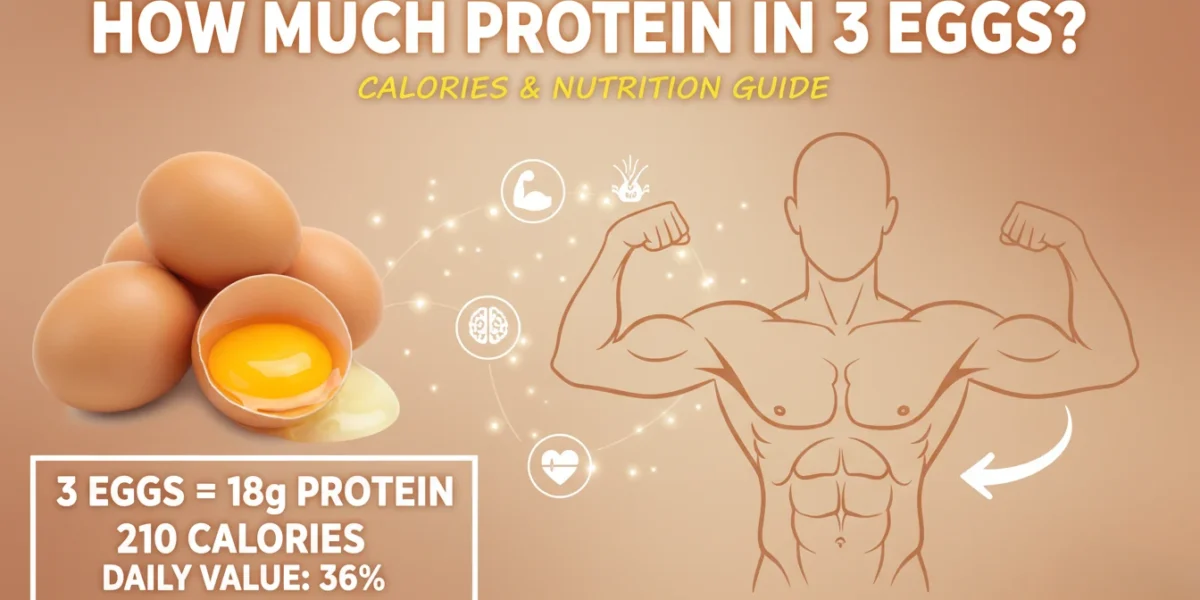
One large egg contains approximately 6 to 6.5 grams of protein. So when you eat 3 large eggs, you’re getting roughly 18 to 19.5 grams of protein in a single sitting.
That’s significant. For context, many fitness professionals recommend aiming for about 20–30 grams of protein per meal. Three eggs get you pretty close to that target on their own, without any other food additions.
Here’s a quick breakdown by egg size:
| Egg Size | Protein Per Egg | Protein in 3 Eggs |
|---|---|---|
| Small | ~4.9g | ~14.7g |
| Medium | ~5.5g | ~16.5g |
| Large | ~6.3g | ~18.9g |
| Extra Large | ~7g | ~21g |
| Jumbo | ~7.9g | ~23.7g |
Most eggs sold in supermarkets are “large,” so 18–19 grams is the number you can reliably use for planning your meals.
What makes egg protein special isn’t just the quantity — it’s the quality. Eggs are considered a “complete protein,” meaning they contain all nine essential amino acids that your body cannot produce on its own. The biological value (BV) of eggs is rated at 100, making them the gold standard against which all other protein sources are measured.
How Many Calories in 3 Eggs?
Along with protein, calories matter — especially if you’re managing your weight. Here’s what you need to know:
One large egg contains approximately 70–78 calories. So 3 large eggs deliver around 210 to 234 calories in total.
That calorie count breaks down roughly like this for whole eggs:
- Protein: ~18g (about 72 calories)
- Fat: ~15g (about 135 calories)
- Carbohydrates: Less than 1g (essentially negligible)
Eggs are naturally low in carbs and high in healthy fats and protein, which makes them excellent for low-carb, ketogenic, and high-protein diets. The fat in eggs comes largely from the yolk and includes both saturated and unsaturated fats, along with fat-soluble vitamins like A, D, E, and K.
How Much Protein in 3 Eggs — By Cooking Method
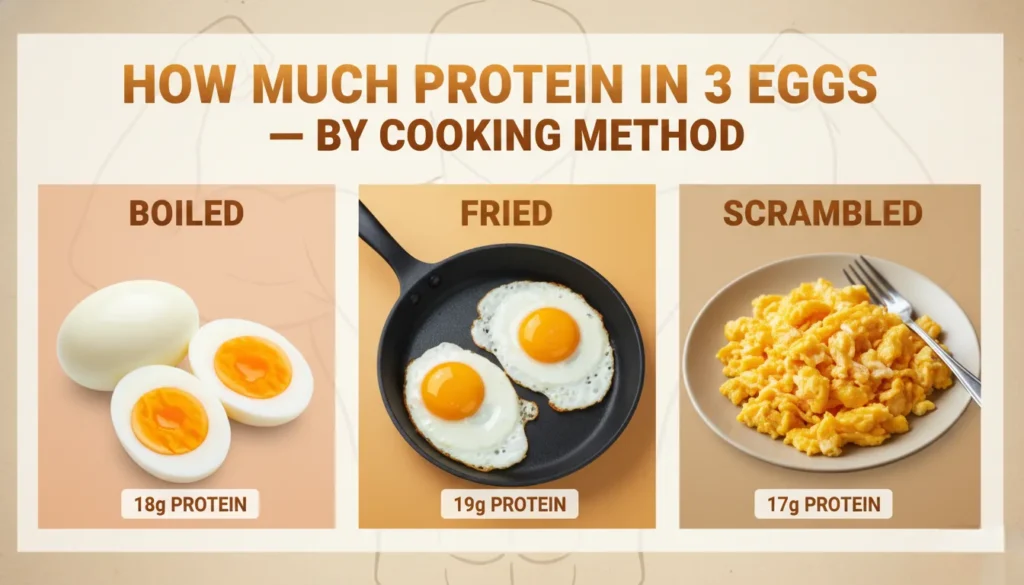
Here’s something that surprises a lot of people: cooking method does affect the nutritional profile of eggs, but perhaps not as dramatically as you’d think. The protein content stays relatively stable, but calorie counts can change significantly depending on what you cook them in.
How Much Protein in 3 Hard Boiled Eggs
Hard boiled eggs are among the cleanest, most pure ways to eat eggs because nothing is added during cooking — no oil, no butter, no fat of any kind.
- Protein in 3 hard boiled eggs: ~18–19g
- Calories in 3 hard boiled eggs: ~210–234
- Fat: ~15g (all natural egg fat, no added fats)
Hard boiled eggs are also one of the most portable, meal-prep-friendly protein sources available. They can be made in bulk, stored in the fridge for up to a week, and grabbed on the go. Studies have also shown that boiling eggs may slightly reduce their digestibility compared to scrambled eggs, but the difference is relatively minor for most people.
Pro tip: Don’t overcook hard boiled eggs. The greenish-gray ring that forms around the yolk when overcooked is a sign of iron sulfide formation — it won’t hurt you, but it does affect flavor and texture.
How Much Protein in 3 Scrambled Eggs
Scrambled eggs are a breakfast staple around the world. The protein content of scrambled eggs is essentially the same as any other preparation — the eggs themselves haven’t changed. What changes is what you add.
- Protein in 3 scrambled eggs (plain): ~18–19g
- Calories in 3 scrambled eggs (plain, no butter): ~210–234
- Calories with 1 tablespoon butter: ~315–350
- Calories with whole milk added: Add ~15–20 calories per 2 tablespoons
If you scramble your eggs with butter, oil, cheese, milk, or cream, those calories add up quickly. A restaurant-style scramble with butter and cream can easily push to 400–500 calories for 3 eggs.
However, from a protein standpoint, you’re still getting your ~18g from the eggs themselves. Cheese adds extra protein if you mix it in — a single ounce of cheddar adds about 6–7g of protein.
Human tip: The fluffiest scrambled eggs come from low, slow heat and a little patience. High heat makes them rubbery and slightly less digestible.
How Much Protein in 3 Fried Eggs
Fried eggs are where calorie counts can really climb, depending on how much oil or butter you use.
- Protein in 3 fried eggs: ~18–19g (same as always)
- Calories in 3 fried eggs (minimal oil, ~1 tsp): ~250–270
- Calories with 1 tablespoon butter or oil: ~340–380
The protein doesn’t change — it’s the added fat that changes the calorie count. If you’re cooking in olive oil, you’re also getting heart-healthy monounsaturated fats, which is a bonus. Cooking in butter adds more saturated fat but also that rich flavor everyone loves.
Health note: Frying at very high temperatures can oxidize the cholesterol in egg yolks. This is more of a concern for people with specific cardiovascular risk factors, and moderate consumption for most healthy adults is generally considered fine.
Full Nutritional Profile of 3 Large Eggs
Let’s go beyond just protein and calories. Here’s the complete nutrition picture for 3 large whole eggs (boiled or plain cooked, no additions):
| Nutrient | Amount in 3 Eggs | % Daily Value (approx.) |
|---|---|---|
| Calories | ~234 | ~12% |
| Protein | ~18.9g | ~38% |
| Total Fat | ~15g | ~19% |
| Saturated Fat | ~4.7g | ~24% |
| Cholesterol | ~600mg | ~200% |
| Sodium | ~210mg | ~9% |
| Carbohydrates | ~1.1g | ~0% |
| Vitamin A | ~540 IU | ~60% |
| Vitamin D | ~123 IU | ~15–31% |
| Vitamin B12 | ~1.5mcg | ~62% |
| Riboflavin (B2) | ~0.75mg | ~58% |
| Selenium | ~47mcg | ~85% |
| Choline | ~525mg | ~95% |
| Iron | ~1.8mg | ~10% |
| Zinc | ~1.6mg | ~15% |
Source: USDA FoodData Central (https://fdc.nal.usda.gov/)
The nutrient that often gets overlooked is choline — three eggs provide nearly your entire daily recommended intake. Choline is essential for brain health, memory, liver function, and fetal development during pregnancy. Most people don’t get nearly enough of it from their diet.
Protein Quality: Why Egg Protein Is Different
Not all protein is created equal. When we talk about protein quality, we look at:
- Amino acid profile — Does it contain all essential amino acids?
- Digestibility — How much of the protein your body actually absorbs
- Biological Value (BV) — How efficiently your body uses absorbed protein
Eggs score near-perfectly on all three. The PDCAAS (Protein Digestibility Corrected Amino Acid Score) for eggs is 1.0 — the maximum possible score.
Cooked eggs are actually more digestible than raw eggs. A landmark study found that cooked egg protein is about 91% digestible, while raw egg protein is only around 51% digestible. So cooking your eggs isn’t just safer (raw eggs can carry Salmonella) — it’s also more efficient for protein absorption.
Source: Evenepoel et al., American Journal of Clinical Nutrition, 1998 (https://academic.oup.com/ajcn)
Pros of Eating 3 Eggs a Day
✅ High-Quality, Complete Protein
As we’ve covered, 3 eggs deliver around 19g of complete protein with all essential amino acids — ideal for muscle repair, immune function, and enzyme production.
✅ Excellent Micronutrient Density
Eggs are one of the few natural food sources of Vitamin D. They also pack B vitamins, selenium, iodine, phosphorus, and choline into a small, affordable package.
✅ Supports Weight Management
High-protein foods increase satiety (the feeling of fullness). Research published in the International Journal of Obesity found that people who ate eggs for breakfast consumed significantly fewer calories throughout the rest of the day compared to those who ate a bagel-based breakfast with equivalent calories.
✅ Supports Muscle Growth and Recovery
For athletes and gym-goers, the leucine content in eggs is particularly valuable. Leucine is the key amino acid that triggers muscle protein synthesis. Three eggs provide roughly 1.5–1.8g of leucine — a meaningful amount for muscle recovery.
✅ Budget-Friendly Protein Source
Compared to chicken breast, whey protein, salmon, or beef, eggs are one of the most affordable protein sources available worldwide. You get remarkable nutritional value for the price.
✅ Versatile and Quick to Prepare
From hard boiled to fried, scrambled to poached, eggs can be prepared dozens of ways, making it easy to keep meals interesting while hitting protein goals.
Cons of Eating 3 Eggs a Day
⚠️ High in Dietary Cholesterol
Three whole eggs contain about 600mg of cholesterol — well above the old 300mg daily limit guideline. While most current research suggests that dietary cholesterol has less impact on blood cholesterol than previously believed, people who are “hyper-responders” to dietary cholesterol (a genetic tendency) may see LDL levels rise with high egg consumption.
Source: Harvard T.H. Chan School of Public Health (https://www.hsph.harvard.edu)
⚠️ Saturated Fat Content
The roughly 4.7g of saturated fat in 3 eggs is about 24% of the recommended daily limit. This is worth keeping in mind for those already consuming a diet high in saturated fats from other sources.
⚠️ Allergy Concerns
Egg allergy is one of the most common food allergies, particularly in children. Symptoms can range from mild (hives, digestive upset) to severe (anaphylaxis). If you have a known or suspected egg allergy, consult a doctor before regular egg consumption.
⚠️ Risk from Raw or Undercooked Eggs
Raw eggs carry a risk of Salmonella contamination. Always cook eggs thoroughly — especially for young children, elderly individuals, pregnant women, or anyone with a compromised immune system.
⚠️ Not Ideal for Everyone
Vegans and people following plant-based diets avoid eggs entirely for ethical or environmental reasons. Egg production also has a carbon and resource footprint, though it is generally lower than beef or dairy.
Who Should Eat 3 Eggs a Day?
Three eggs a day can be an excellent choice for:
- Athletes and gym-goers looking for natural, whole-food protein sources
- People on low-carb or ketogenic diets, since eggs are nearly carb-free
- Pregnant women (choline supports fetal brain development — always consult your OB)
- Older adults who need higher protein intake to prevent muscle loss (sarcopenia)
- Budget-conscious eaters who want maximum nutrition per dollar
Three eggs a day may require more careful consideration for:
- People with familial hypercholesterolemia
- Those with Type 2 diabetes (some research suggests moderation is wise — discuss with your doctor)
- Anyone with a documented egg allergy
How to Maximize Protein Absorption from Eggs
A few practical tips to get the most out of every egg you eat:
- Cook them — Cooked eggs are significantly more digestible than raw eggs
- Eat the whole egg — The yolk contains about 43% of the total protein, plus most of the micronutrients
- Pair with vegetables — Adding veggies doesn’t reduce protein but massively increases meal nutritional value
- Don’t overcook — Very high heat for extended periods can denature proteins in ways that slightly reduce their digestibility
- Combine with vitamin C foods — Vitamin C helps with iron absorption from eggs
- Eat within a balanced diet — Protein from eggs works best when your overall diet is balanced and includes adequate calories
Eggs vs. Other Protein Sources: How Do They Compare?
| Food (per ~200 calories) | Protein | Notes |
|---|---|---|
| 3 Large Eggs | ~19g | Complete protein, high nutrient density |
| Chicken Breast (100g) | ~31g | Higher protein, lower fat |
| Greek Yogurt (200g) | ~20g | Also high in calcium |
| Canned Tuna (100g) | ~26g | High protein, omega-3 rich |
| Lentils (1 cup cooked) | ~18g | High fiber, plant-based, incomplete protein |
| Whey Protein (1 scoop) | ~25g | Processed, convenient |
| Tofu (150g) | ~12g | Plant-based, complete protein |
Eggs hold their own remarkably well — and unlike many processed protein sources, they come packaged with a full suite of vitamins and minerals that you simply don’t get from a protein shake.
Frequently Asked Questions (FAQ)
Q1: How much protein in 3 eggs hard boiled specifically?
Hard boiling doesn’t reduce the protein content of eggs — you still get approximately 18 to 19 grams of protein from 3 large hard boiled eggs. Because nothing is added during cooking, the calorie count is also the most accurate representation of the egg itself: around 210–234 calories for 3 large eggs.
Q2: How many calories in 3 eggs total?
Three large whole eggs contain approximately 210 to 234 calories. This can rise significantly based on cooking method and additions — butter, oil, cheese, and cream all add calories on top of the egg’s natural calorie content.
Q3: How much protein in 3 scrambled eggs?
The eggs themselves still provide ~18–19g of protein when scrambled. However, the calorie count will depend on what you add. Plain scrambled eggs with no added fats: ~210–234 calories. With a tablespoon of butter and a splash of milk: closer to 320–370 calories.
Q4: How much protein in 3 fried eggs?
Again, the protein stays the same — ~18–19g. The calories rise based on the oil or butter used. With minimal oil (~1 tsp), expect around 250–275 calories. A generous tablespoon of butter or oil adds another 100–120 calories.
Q5: Is it safe to eat 3 eggs every day?
For most healthy adults, yes. Major health organizations including the American Heart Association have relaxed previous strict limits on egg consumption. Research suggests that for healthy individuals, eating up to 1–3 eggs per day does not meaningfully increase the risk of heart disease. However, individuals with diabetes, cardiovascular disease, or specific genetic cholesterol conditions should consult their doctor.
Q6: Do egg whites have more protein than whole eggs?
Egg whites have about 3.6g of protein per white, while a whole large egg has about 6.3g. So the yolk contributes about 2.7g of protein — nearly half. Eating only whites means you miss out on the yolk’s vitamins, minerals, healthy fats, and choline. For most people, whole eggs are the better nutritional choice.
Q7: Are brown eggs more nutritious than white eggs?
No — shell color is determined by the breed of hen and has no bearing on nutritional value. Both white and brown eggs have essentially the same protein, calorie, and nutrient content.
Q8: Does eating eggs help with weight loss?
Research suggests yes, for many people. The high protein content increases satiety, which can reduce overall calorie intake throughout the day. A study in the Nutrition Research journal found that people who ate eggs for breakfast felt fuller and consumed fewer calories at lunch than those who ate a bagel breakfast.
Q9: How much protein in 3 eggs with yolks vs. without?
3 whole eggs: ~18.9g protein
3 egg whites only: ~10.8g protein
3 yolks only: ~8.1g protein
You lose nearly 43% of the protein when you discard the yolks, along with the majority of the micronutrients.
Q10: Can I eat 3 eggs before a workout?
Yes — eggs are an excellent pre-workout protein source. However, because they contain fat (which slows digestion), it may be better to eat them 1.5–2 hours before exercise rather than immediately before. Post-workout, 3 eggs are an excellent muscle-recovery meal.
Related Keywords and Topics Covered in This Guide
This article addresses the following commonly searched nutrition topics:
- How much protein in 3 eggs
- How much protein in 3 eggs hard boiled
- How many calories in 3 eggs
- How much protein in 3 eggs scrambled
- How much protein in 3 eggs fried
- How much protein in an egg
- Egg nutrition facts
- Calories in boiled eggs
- Are eggs good for weight loss
- Egg protein vs other protein sources
- Is it safe to eat 3 eggs a day
- Egg yolk protein vs egg white protein
Expert Sources and References
- USDA FoodData Central — Complete nutritional database for eggs → https://fdc.nal.usda.gov/
- Evenepoel P, et al. (1998) — “Digestibility of Cooked and Raw Egg Protein in Humans as Assessed by Stable Isotope Techniques” → American Journal of Clinical Nutrition, Oxford Academic → https://academic.oup.com/ajcn
- Harvard T.H. Chan School of Public Health — The Nutrition Source: Eggs → https://www.hsph.harvard.edu/nutritionsource/food-features/eggs/
- American Heart Association — Eggs and Heart Disease → https://www.heart.org
- Vander Wal JS, et al. (2005) — “Short-term effect of eggs on satiety in overweight and obese subjects” → Journal of the American College of Nutrition → https://www.tandfonline.com/doi/abs/10.1080/07315724.2005.10719497
- Ratliff J, et al. (2010) — “Consuming eggs for breakfast influences plasma glucose and ghrelin” → Nutrition Research → https://www.sciencedirect.com/
- Herron KL & Fernandez ML (2004) — “Are the Current Dietary Guidelines Regarding Egg Consumption Appropriate?” → Journal of Nutrition, Oxford Academic → https://academic.oup.com/jn
- National Institutes of Health (NIH) — Choline Fact Sheet → https://ods.od.nih.gov/factsheets/Choline-HealthProfessional/
Conclusion: Should You Eat 3 Eggs a Day?
The short answer: for most healthy people, absolutely yes.
Three eggs provide roughly 18–19 grams of complete, high-quality protein alongside an impressive array of vitamins, minerals, healthy fats, and choline — all in a quick, affordable, endlessly versatile package. Whether you prefer them hard boiled, scrambled, or fried, the protein content stays consistent across cooking methods. The biggest nutritional variable is what you add during cooking.
Eggs aren’t a magic food, and like everything else, moderation and context matter. If you have specific health conditions — particularly around cholesterol or cardiovascular disease — it’s worth having a conversation with your doctor or a registered dietitian about how eggs fit into your personal dietary picture.
But for the average person eating a balanced diet? Three eggs is a rock-solid nutritional choice that has stood the test of time — and modern science continues to back it up.
Disclaimer
The information provided in this article is intended for general educational and informational purposes only and does not constitute medical, nutritional, or dietary advice. Always consult a qualified healthcare professional, registered dietitian, or physician before making significant changes to your diet, particularly if you have existing health conditions such as cardiovascular disease, diabetes, high cholesterol, food allergies, or are pregnant or nursing. Individual nutritional needs vary based on age, sex, body weight, activity level, and overall health status.
Read expert-backed health guides for everyday fitness goals.

Other Articles

Daily Habits That Help Improve Brain Health Fast
Improve Digestion with Gut Health Powder Supplements