




Protein supplements are becoming popular choices nowadays. People who want to get in shape or simply stay healthy, fit, and strong are looking for easy ways to increase their daily protein intake. They are an easy method to get additional protein into your diet without changing your usual daily meals.
But as a beginner, many people don’t know which protein supplement to choose, how much to take, or when it should be taken. This blog goes over the basics of protein supplements and helps you understand which protein supplement will suit your health, and answers your queries related to protein.
Understanding Protein and Its Role in the Body
Your body relies heavily on protein for muscle creation, skin, hair, and enzyme formation; therefore, it’s vitally important that you consume adequate amounts. If you do not have enough protein in your diet, your body will have a difficult time repairing tissue and secreting hormones, thus decreasing your overall immune system function.
Protein supplements are a good option for starting out in your quest to grow muscles, providing you with crucial nutrients to initiate muscle growth and supplying your body with necessary proteins for recovery from exercise.
What Protein Does for Your Body?
Protein plays several key roles in keeping your body healthy:
- Muscle Growth and Repair: After workouts, protein helps in muscle repair and promotes growth. Muscle recovery supplements or a high-protein diet enhance this process even further.
- Hormone and Enzyme Production: Protein helps in the production of hormones like insulin and enzymes, and improves digestion and the body’s metabolism.
- Immune Support: Proteins are incredibly important because they help your body make antibodies that fight infections and keep you healthy.
- Energy Source: While carbs and fats are your main energy sources, protein can provide fuel when your body needs it.
Types of Protein Sources
There are two ways to get protein from food: by eating whole foods or by using protein supplements. Whole foods consist of animal sources and plant sources:
Animal Sources:
- Eggs
- Chicken
- Fish
- Lean beef
- Dairy products (milk, cheese, yogurt)
- Turkey
- Cottage cheese
- Greek yogurt
- Shrimp
- Pork
Plant Sources:
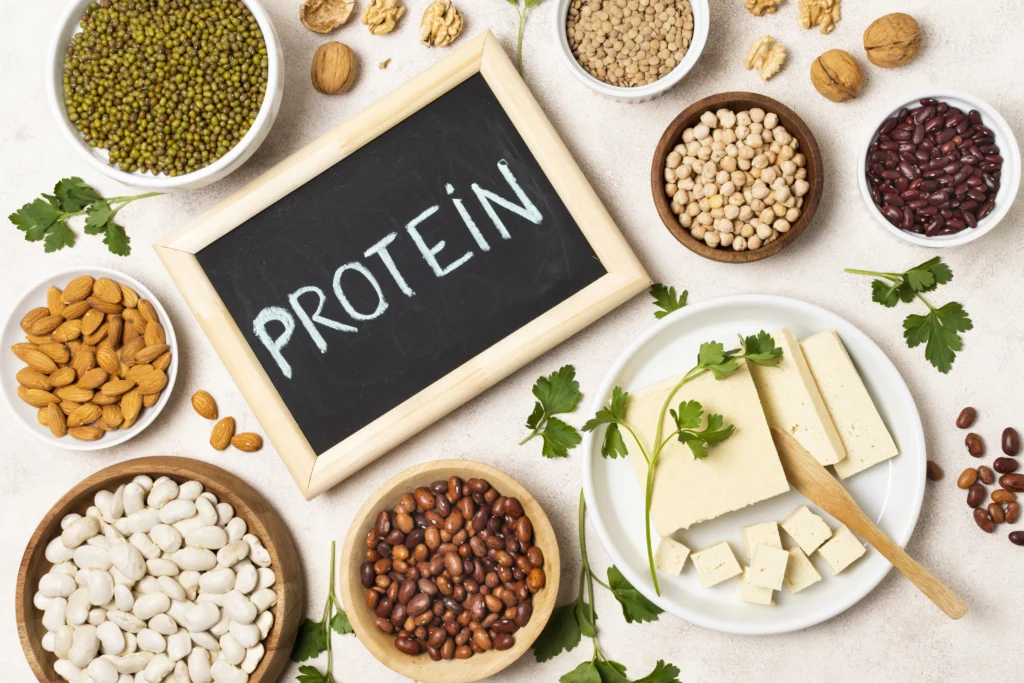
- Lentils
- Beans (kidney beans, black beans)
- Chickpeas
- Tofu
- Quinoa (great for anyone using plant-based proteins)
- Soybeans
- Tempeh
- Edamame
- Peanuts
- Almonds
- Chia seeds
- Pumpkin seeds
- Sunflower seeds
- Oats
- Brown rice
Types of Protein Supplements for Beginners
There are several types of protein supplements available today. Different types of protein work in different ways in the body, so understanding each one can help people choose the right supplement to match their health goals or meet their daily protein needs.
1. Whey Protein Supplement:
Whey protein supplements are by far the most common protein supplements and are commonly used after exercising. They are quickly absorbed by the body and can help support muscle recovery and build muscle through protein supplementation.
2. Casein Protein:
Casein protein is digested in smaller amounts and over a longer period of time. Because of this many people incorporate casein into their high-protein diet to assist in muscle recovery from workouts between meals or during the night while sleeping.
3. Plant-Based Protein Powder:
Pea protein powder, rice protein powder, soy protein powder, and hemp protein powder are all types of plant-based protein powder. So, if someone doesn’t eat dairy but wants to use protein supplements to build muscle, plant-based protein supplements will help.
4. Protein Blends:
A protein blend is a combination of different protein sources. This makes the body absorb some of the protein quickly while the rest is digested more slowly. Because of this, these types of protein supplements help support muscle repair by supplying protein over a longer period of time.
How Much Protein Do You Really Need?
Your daily protein needs depend on your age, weight, activity level, and fitness goals. The daily requirement of protein differs for everyone:
- Sedentary Adults: 0.8 grams per kilogram of body weight per day
- Active Adults or Beginners in Strength Training: 1.2-1.6 grams per kilogram of body weight per day
- Muscle-Building or Intensive Training: 1.6-2.2 grams per kilogram of body weight per day
For example, a beginner weighing 70 kg (154 lbs) who wants to build muscle should aim for about 84-112 grams of protein per day. Combining a high-protein diet with whey protein supplements or other protein supplements for muscle growth makes it easier to hit your protein targets without overloading your meals.
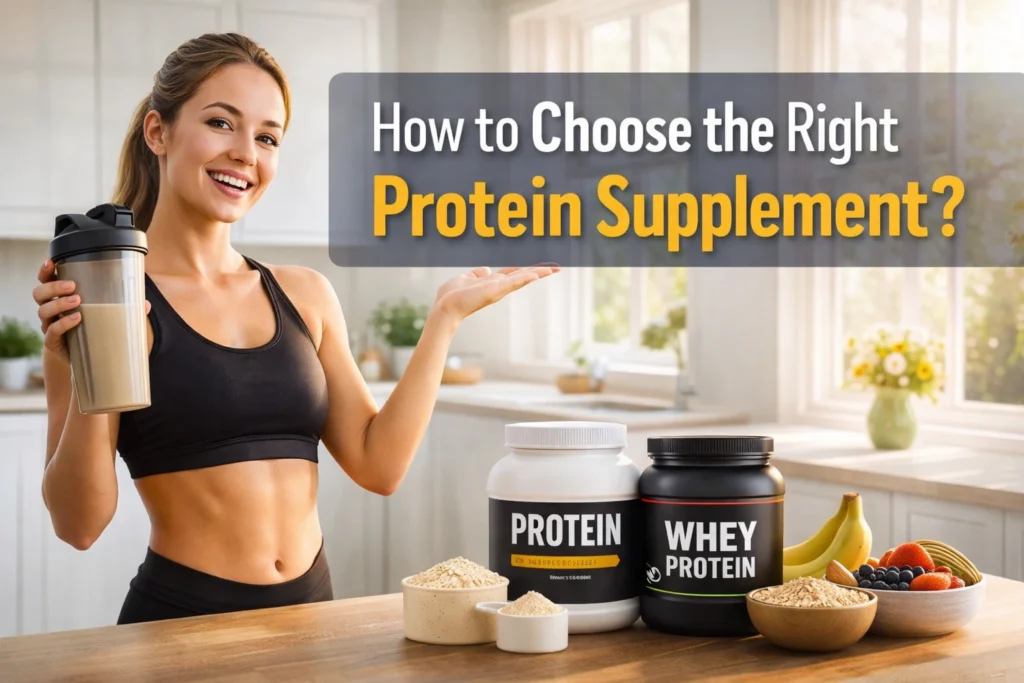
How to Choose the Right Protein Supplement?
As a beginner, it is really very confusing to choose the right protein supplement. Though there are many options available, like whey protein supplement, casein, plant-based protein powder, or blended formulas. But choosing the right protein supplement depends on your weight loss goals, lifestyle, and dietary needs.
Before buying a supplement, think about these important factors:
- Your Goals: The protein supplement you choose should help you achieve your fitness goals. Whey protein supplements, which digest quickly, may help muscles grow and heal.
- Allergies and Sensitivities: Some people are unable to handle whey or casein because they are lactose intolerant or allergic to them. At times, pea, rice, or soy protein powder is a better choice.
- Lifestyle and Convenience: Individuals who are working are sometimes unable to cook high-protein meals due to busy schedules and limited time. So in this case, choose protein supplements that can fulfill daily protein requirements.
Reading Labels: What to Look For?
By reading supplement labels carefully, you can be sure to select a superior supplement – one that meets your needs:
- Protein Amount – The supplement must supply all the protein you need per serving to meet your daily protein requirement, and also fit into your overall dietary plan to maintain a high-protein intake.
- Sugar Content and Other Fillers – Do not choose a product that contains large amounts of sugar, artificial sweeteners, or other fillers.
- Amino Acids – Amino acids such as leucine are necessary for muscle repair supplements to work effectively.
- Caloric Content – For fat loss, if you are following a calorie-restricted diet, protein supplements with fewer than 200 calories per serving make a good post-workout meal while still keeping you full.
Common Mistakes Beginners Make
Beginners often make mistakes with protein supplements because they aren’t sure how to use them properly or how they fit into a daily diet.
- Overestimating Needs: More protein does not mean quicker results, but putting extra strain on your body with excess protein does. Stick to the recommended amounts.
- Excluding Whole Foods: Protein supplements should supplement a high-protein diet, not serve as a full meal replacement.
- Choosing the Wrong Type of Protein: Some users choose whey but don’t realize until it is too late that they are lactose intolerant, while others choose plant proteins when they should be using a fast-absorbing protein after exercising.
- Inaccurate Timing for Your Protein: Consuming protein before or after working out will enhance muscle recovery or muscle growth.
Benefits of Protein Supplements for Beginners
Protein supplements provide various benefits:
1. Muscles mend more quickly
When you train out, protein helps mend the tiny tears that form in muscle fibers. Researchers have shown that eating 20 to 30 grams of protein after a workout can help ease muscle pain by up to 30%. This helps you get better faster and stay on pace with your workouts.
2. Helps muscles get bigger
When you utilize protein supplements with strength training, they can help you create more lean muscle over time. One meta-analysis found that using protein supplements caused people to gain an average of 1.2 kg (2.6 lbs) more muscle over 8 weeks than just exercising.
3. Watching your weight
Protein fills you up, which helps you eat fewer calories overall and stick to a high-protein diet to lose weight. This makes it easier for folks who are new to working out to preserve their muscles while shedding weight.
4. Simple to use
Protein powders and shakes are a quick and healthy choice for busy people who have trouble making a full meal. This makes it easier to get the right amount of protein every day.
5. Helps bones stay healthy
Protein is good for bones as well as muscles. Studies have shown that eating extra protein can make bones denser, which can help keep bones healthy over time and lower the risk of injury.
6. Makes metabolism work faster
Getting adequate protein can assist beginners in maintaining their metabolism going and attain their fitness goals by increasing thermogenesis and calorie burning work better.
Protein Supplements for Weight Loss
Protein supplements can play a significant role in weight loss for beginners. Protein helps boost metabolism and keep you feeling full longer, so you consume fewer calories overall. Here are a few specific ways that protein supplements assist with weight loss:
- Decreased Impulses to Overeat – Consuming protein helps you feel full, so you will not be tempted to eat late at night or make impulsive decisions about food.
- Protects Your Lean Muscle Mass (While You’re Losing Weight) – When you consume fewer calories, your body will burn fat rather than lose valuable muscle, which is necessary for maintaining your metabolism.
- Enhanced Weight Loss During Exercise – Eating adequate amounts of protein allows your body to use fat stores as energy during exercise, improving your ability to perform optimally.
- Quick & Easy Access to Nutrition – Whey or plant protein powders typically provide 20-30 grams of protein per serving, making them easy to add to your meals and drinks for added nutritional value.
Protein Supplements for Workout Recovery
After a workout, our body gets tired and sore. And as a beginner, recovery is not just about soreness, it’s about helping your body to adapt and perform better without injury. In recovery, protein supplements are very helpful as they help in:
- Muscle glycogen replenishment – restores energy stores faster.
- Immune support – helps you stay healthy and consistent.
- Inflammation control – reduces fatigue and speeds up recovery.
After exercise, combining protein with carbs, like making a whey shake with fruits or oats, helps rebuild muscles and keeps you more energetic more effectively than protein alone.
After a workout session, protein supplements help prevent muscle breakdown (catabolism), maintain lean mass, and support joint and connective tissue health, which reduces the risk of injury. Using protein after workouts helps beginners recover faster, stay consistent, and progress safely.
Protein Supplements: Side Effects and Safety Tips
Protein supplements can aid in muscle growth, recovery, or adhering to a high-protein diet; however, it is essential to understand any potential side effects and how to safely take them. Selecting the correct type and dosage can minimize the risk of problems and support your fitness goals.
Common Side Effects of Excess Protein
Everything should be consumed in limited amounts; the same goes for protein. Though it is essential for the body and overall health, sometimes overconsumption can lead to:
1. Digestive Issues: Excess protein may cause discomfort in the stomach or bloating due to gas, because overconsumption of protein can lead to gas-producing bacteria growing within the intestines.
2. Kidney Strain: Consuming an excessive amount of protein over an extended time may cause damage to the kidneys, especially if you have pre-existing kidney problems.
3. Dehydration: Protein needs water to break down the protein consumed, and if you do not drink enough water, you can become dehydrated.
4. Weight gain: Excessive consumption of protein can, in some cases, result in unwanted weight gain due to a calorie surplus, regardless of whether or not you are consuming whey protein to lose weight.
Who Should Avoid Certain Supplements?
Not all protein supplements are suitable for everyone. Consider avoiding or being cautious with certain products if you:
- Are lactose intolerant or allergic to dairy (in which case plant-based protein powder is a better choice than whey).
- Have kidney or liver issues; high-protein intake from whey protein supplements or multiple protein sources may be risky.
- Are trying to lose weight but choose calorie-dense supplements instead of protein supplements for weight loss.
Always consult a healthcare professional if you have medical conditions before starting any supplement.
How to Take Protein Supplements Safely?
As a beginner, it is very important to keep certain things in mind while taking a protein supplement
- Don’t take too many supplements and stick to your high-protein diet.
- Eating whole meals and using protein supplements to build muscle or recover from an injury can help provide a balanced diet.
- Drinking water can aid your metabolism and digestion.
- Reading labels could help you avoid fake ingredients, excessive sugars, and chemicals.
- For optimal absorption and efficacy, spread out your protein intake throughout the day.
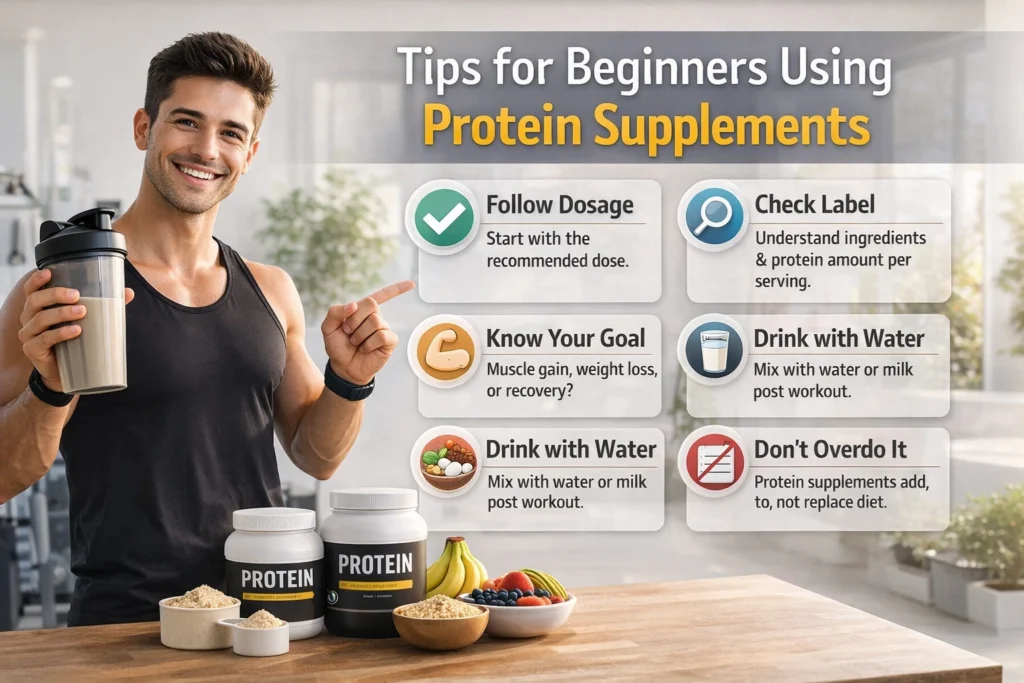
Tips for Beginners Using Protein Supplements
- Start Slowly, Build Up To More – Start the day with one serving first, then increase later based on how active you are and how much protein you need.
- Combine with real foods – Use protein powders in combination with food and nutrient-rich meals (such as scrambled eggs) to build a healthy diet.
- Hydrate Yourself – Maintain proper hydration and drink approximately two to three liters of water per day to help your body properly break down proteins.
- Monitor your progress – By documenting both your daily protein intake and tracking how your body responds to resistance training and aerobics, you can use this data to determine what works best for you.
- Pair with exercise – Use protein in conjunction with a resistance-based exercise program combined with a protein-based diet for muscle building, recovery from exercise, and fat loss.
How to Incorporate Protein Supplements into Your Daily Diet?
Adding protein supplements to your daily life is simple and effective. If taken in a proper amount, they can help you satisfy protein needs, recover muscle damage, and maintain a balanced high-protein diet on a daily basis. Suitable supplements can fill diet gaps for muscle building, workout recovery, or weight management.
- Drink a protein shake after workouts to support muscle recovery.
- Add whey protein supplements or plant-based protein powder to milk, water, or almond milk.
- Blend protein powder with fruits like bananas or berries for a nutritious smoothie.
- Mix protein powder into foods like oatmeal, yogurt, or smoothies.
- Combine supplements with whole foods such as eggs, chicken, fish, beans, or lentils.
- Use protein shakes as a quick snack when you cannot prepare a full meal.
- Choose lighter shakes when using protein supplements for weight loss.
- Track your daily protein intake to maintain a balanced high-protein diet.
FAQs
1. Can beginners take protein supplements every day?
Yes, beginner can take protein supplements every day. These supplements help meet protein needs, support muscle recovery and growth, and aid in fat management. On a daily basis, 1-2 scoops a day are sufficient. While whole foods are ideal, supplements just provide a simple, convenient way to keep steady and consistent.
2. Are plant-based protein powders as effective as whey?
Whey protein is excellent for rapid muscle recovery because it is easily absorbed. Plant-based protein also contains all the essential amino acids that support muscle growth, recovery, and overall well-being.
3. How much protein should I take per serving?
It is more effective to take 20 to 30 grams of protein at each meal for beginners. This is enough protein to allow your muscles to recover, grow, and meet your daily protein requirement. A small adjustment can be made in individual amounts of protein consumed depending on body weight, level of activity, and fitness goals.
4. Can protein supplements help with weight loss?
Yes! Protein supplements support satiety and help control cravings, along with supporting the maintenance of lean muscle mass while losing fat. When used with proper diet and regular exercise, protein supplements help you adhere to your weight loss plan and reach your weight loss goal more easily.
5. When is the best time to take protein supplements?
The best time to take protein really depends on what you’re trying to achieve. A shake 30–60 minutes after your workout can help your muscles repair and grow. You can also have protein in the morning or as a snack to meet your daily needs, stay full, and support weight management and recovery. When combined with a balanced diet and regular exercise, protein supplements can help you get the most from your efforts.
Keep Learning with Reviews and Buy
Looking for clear and reliable health information? Reviews and Buy provides easy-to-understand wellness guides, honest supplement reviews, and detailed product comparisons to help you make informed choices. Discover useful insights, practical health tips, and trusted recommendations so you can choose products with confidence and continue your journey toward a healthier lifestyle.