




Blood sugar levels plays very important role in your overall health. Research shows that more than 1 in 3 adults may have higher-than-normal glucose without even realizing it, which can raise the risk of heart problems and metabolic conditions. Knowing your numbers early can really help you stay on track.
Your blood glucose naturally goes up after eating and can also change with stress, sleep, and daily activity. Experts have found that repeated spikes over time may affect energy, weight, and organ health. That’s why doctors look at different test results together to spot concerns before they become serious.
What Are Blood Sugar Levels?
The amount of glucose present in your bloodstream is referred to as blood sugar Levels. Glucose is the primary source of energy in the body; it comes from the food you eat, especially carbohydrates. After digestion, glucose enters the bloodstream and is regulated by insulin, a hormone produced by the pancreas.
When this system works properly, blood sugar remains within a healthy range. However, when insulin production is low or the body becomes resistant to insulin, glucose can build up in the bloodstream. Over time, high levels may damage blood vessels, nerves, and organs.
Monitoring blood sugar levels helps identify:
- Normal glucose control
- Prediabetes range
- Diabetes
- Risk of complications
- Insulin resistance
- Lifestyle impact on glucose
- Early metabolic changes
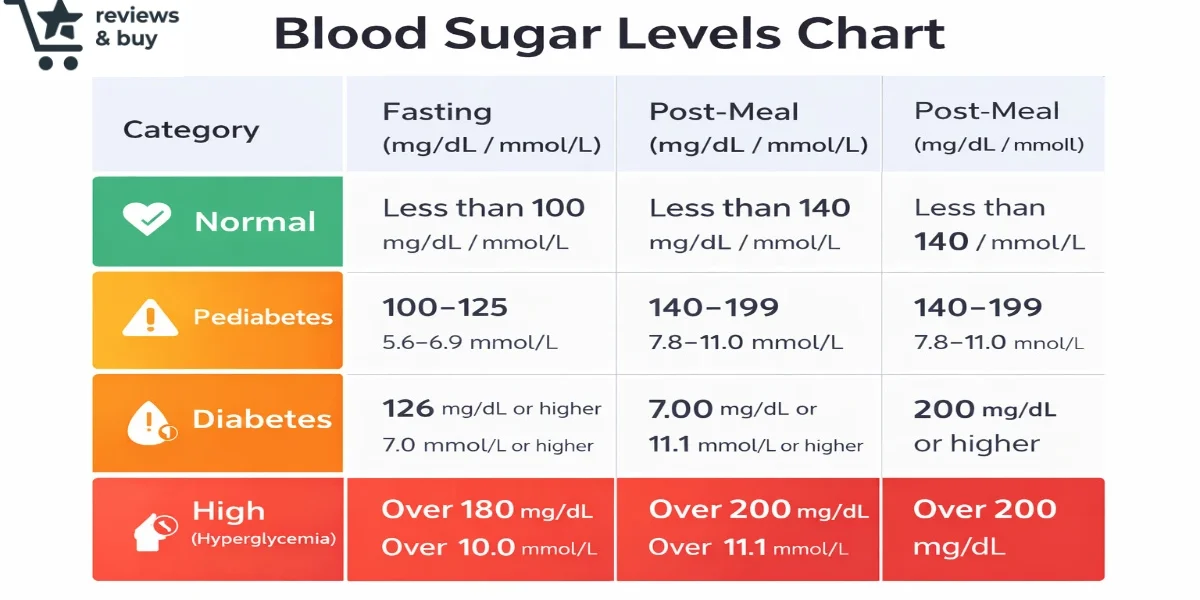
A structured blood sugar levels chart provides reference ranges that doctors use for diagnosis and ongoing management.
Blood Sugar Levels Chart: Normal, Prediabetes, and Diabetes
A clear blood sugar levels chart makes it easier to identify what is considered normal, when levels are slightly elevated, and when they become dangerous.
| Test type | Normal range | Prediabetes range | Diabetes range |
| Fasting Glucose Levels | 70-99 mg/dL | 100-125 mg/dL | 126 mg/dL or higher |
| Post-Meal Blood Sugar (2 hrs after eating) | Less than 140 mg/dL | 140-199 mg/dL | 200 mg/dL or higher |
| HbA1c Test | Below 5.7% | 5.7%-6.4% | 6.5 or higher |
This chart is just a general guideline to have an idea about your sugar levels. Always consult your health care provider for the accurate interpretation and better results.
Fasting Glucose Levels: What They Mean?
Fasting glucose is normally measured first thing in the morning after not eating for at least 8 hours. This has been done to demonstrate the body’s ability to control blood sugar naturally and without influence from food. The levels of fasting glucose provide valuable insight into the overall health of your metabolism.
Most healthy people will have fasting blood glucose levels that stay between 70 and 99 mg/dl. When fasting blood glucose levels begin to rise, it may be an indicator that the body is beginning to become less capable of processing glucose efficiently. If consistently elevated fasting glucose levels are maintained over time, it could indicate the onset of diabetes.
Common causes for increased fasting glucose are:
- Insulin resistance;
- Poor/insufficient sleep;
- Hormonal changes
- Low physical activity
- Heavy carbohydrates are consumed late in the evening.
Keeping a record of your morning fasting glucose levels over time allows you to observe any patterns and learn how your long-term health may be affected, allowing you to implement corrective actions to reduce long-term health risks.
Post-Meal Blood Sugar: What Happens After You Eat?
Your post-meal blood sugar – also called your postprandial glucose – will be measured approximately 2 hours after eating and is an indicator of how well your body manages carbohydrates as well as how effectively insulin is moving glucose into your cells to provide energy.
For the average adult and adult’s body without diabetes, a typical post-meal blood sugar reading will remain below 140 mg/dL; if your blood sugar consistently exceeds that – on multiple occasions – you may have reduced tolerance for glucose, or you may have experienced some changes within your body’s metabolism that need to be addressed.
Common reasons why your blood sugar would suddenly rise after a meal include:
- Eating very large meals
- Consuming refined or processed carbs
- Drinking too many sugary drinks or desserts
- Low protein or fiber intake
- Lack of activity after eating
Eating frequent, balanced meals (which include protein, fiber, and healthy fats), along with incorporating light movement (e.g., walking) immediately after your meal,s will assist you in maintaining a more stable post-meal blood sugar level.
The HbA1c Test: Long-Term Blood Sugar Control
Unlike single glucose readings taken at one moment, the HbA1c test shows your average blood sugar over the past two to three months. It measures how much glucose has attached to hemoglobin, the protein in red blood cells that carries oxygen.
This provides an accurate picture of overall metabolic and blood glucose control, free from daily fluctuations caused by meals, stress, illness, and activity.
In general, you can understand like this:
- Below 5.7%: Normal blood sugar
- 5.7% to 6.4%: Prediabetes
- 6.5% or higher: Diabetes
Doctors usually review HbA1c along with fasting glucose or other lab tests to determine a diagnosis and to assess the long-term blood glucose control from prior tests.
Difference Between Fasting and Random Blood Sugar
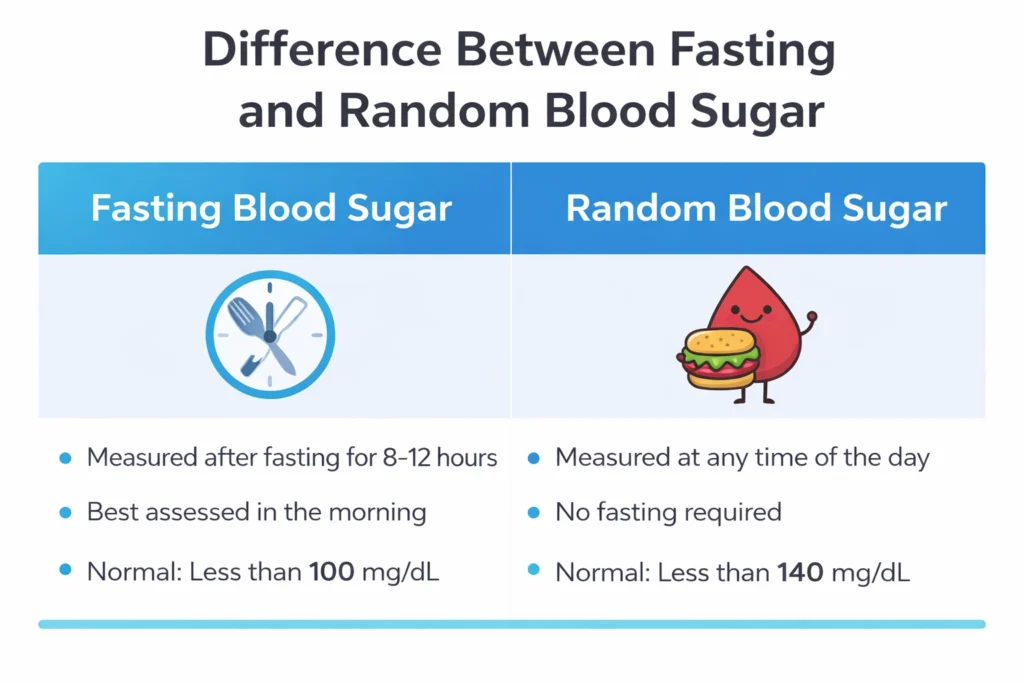
To check glucose levels, two tests are done: fasting and random blood sugar tests. Generally, people get confused about the differences between the two.
1. Fasting blood sugar is measured after an overnight fast on an empty stomach and shows baseline glucose control.
2. Random blood sugar can be measured at any time, regardless of meals.
If I explain it simply, a random blood sugar test is usually done when someone is having symptoms like feeling very thirsty, tired, or needing to urinate often. If that reading comes above 200 mg/dL along with symptoms, it may suggest diabetes.
However, fasting blood sugar gives us a more dependable understanding because it’s checked after you haven’t eaten for several hours. That way, we can see how your body manages sugar without the effect of recent food.
Blood Sugar Levels Chart by Age
Blood sugar targets may slightly vary depending on age and overall health. Below is a simplified reference.
| Group | Fasting target | Post-meal target |
| Children | 70-100 mg/dL | Below 140 mg/dL |
| Adults | 70-90 mg/dL | Below 140 mg/dL |
| Older Adults | 80-110 mg/dL | Below 180 mg/dL |
For older adults, doctors sometimes keep blood sugar targets a little more flexible to avoid the risk of levels dropping too low, which can be more dangerous than slightly higher readings.
Dangerous Blood Sugar Levels Symptoms
Being able to spot the warning signs of dangerously high or low blood sugar early can make a big difference, because quick action often helps prevent serious health complications.
1. High Blood Sugar (Hyperglycemia)
High blood sugar symptoms may include:
- Frequent urination
- Excessive thirst
- Blurred vision
- Fatigue
- Headaches
- Dry mouth
If your blood sugar crosses 300 mg/dL, then it is a serious concern. At these high sugar levels body starts feeling overwhelmed and can develop ito serious health issue quickly. Getting medical care as soon as possible helps prevent complications and keeps you safe.
2. Low Blood Sugar (Hypoglycemia)
Low blood sugar symptoms include:
- Shaking
- Sweating
- Confusion
- Rapid heartbeat
- Dizziness
Very low blood sugar can be dangerous. If it drops too much, a person may feel dizzy, confused, or weak, and in severe cases, it can even cause fainting or seizures, which need immediate attention.
What Causes Blood Sugar to Rise?
Blood sugar usually increases when the body either receives more glucose than it can process or when insulin is not working efficiently. Food plays a big role, but daily habits, stress levels, and overall health also strongly influence glucose control.
Common causes include:
- Eating high-carbohydrate or sugary foods
- Large portion sizes or frequent snacking
- Lack of physical activity
- Poor sleep or irregular sleep patterns
- Emotional or physical stress
- Hormonal imbalances
- Illness or infections
- Certain medications
- Insulin resistance or metabolic conditions
Lifestyle Changes to Maintain Healthy Blood Sugar

In order to maintain a steady blood sugar level, it is recommended that you create small, consistent daily habits rather than making big lifestyle changes overnight. Eating well-balanced meals, being physically active, and drinking plenty of water are ways to help keep blood sugar levels stable.
1. Balanced Meals
Try to combine different nutrients when planning your meals so that sugar from the foods you eat enters your bloodstream slowly, instead of causing spikes. You can eat:
- Lean sources of protein (eggs, beans, chicken, tofu, fish).
- Whole grains (oats, brown rice, whole wheat).
- Vegetables.
- Healthy fats (nuts, seeds, olive oil, and limited ghee).
- Foods high in fiber (salads, beans, fruit with the skin).
Refined sugar, highly processed foods, and sugary drinks come with a lot of sugar content that can rapidly spike your blood sugar, so try to avoid them or limit their consumption.
2. Regular Physical Activity
Regularly engaging in physical activity helps your body to use the glucose from food more effectively and will also improve the way your body responds to insulin. You should aim to:
- Walk for approximately 30 minutes every day.
- Perform strength training exercises twice a week.
- Go for a light walk or stretch after you eat.
3. Drink Plenty Of Water
Drinking enough water keeps you hydrated and helps kidney to function properly, and helps eliminate excess glucose from your body. Try to drink more water throughout the day.
Prediabetes Range: A Warning Sign
Prediabetes does not mean you have diabetes, but it does mean your blood sugar is higher than normal, and your body may be starting to struggle with glucose control. Most people at this stage feel completely fine, which is why it often goes unnoticed unless tested.
The good news is that this stage is also a strong opportunity to take action. Research shows that simple lifestyle steps like maintaining a healthy weight, staying physically active, improving food choices, and sleeping well can greatly lower the chances of developing type 2 diabetes. In many cases, blood sugar levels can even return to the normal range when these changes are followed consistently.
Monitoring Blood Sugar at Home
Checking your blood sugar at home helps you see how your body reacts to what you eat, how active you are, your stress levels, and your daily routine. A home glucose meter gives quick results, so you can understand what’s working and what may need attention.
When you’re tracking your levels:
- Try to check at the same time each day
- Keep a simple record of your numbers
- Make a note of meals, activity, and sleep
- Show your readings to your doctor during appointments
Keep in mind, one number by itself doesn’t mean much. What really helps is looking at the trend over several days or weeks.
When to See a Doctor?
If you notice any of the following symptoms, you should talk to your doctor:
- Blood sugar levels that stay above 125 mg/dL for a long time
- After meals, blood sugar levels are above 200 mg/dL.
- Symptoms like excessive thirst, frequent urination, fatigue, or dizziness
- HbA1c levels higher than 6.5%
Getting medical help early can help you avoid health problems in the future and make it easier to control your blood sugar over time.
Frequently Asked Questions
1. What are normal blood sugar levels after eating?
Healthy and non-diabetic people typically have blood levels between 80 and 140 mg/dL 2 hours after eating. The usual post-2-hr target for a diabetic is <180 mg/dL, but will vary based on other medical considerations of the individual.
2. How often should fasting glucose levels be checked?
Fasting glucose should generally be checked once a year after age 30 during regular health check-ups. If you’re over 40, overweight, or at risk for prediabetes, testing every 3-6 months may be recommended.
3. What is the difference between fasting and random blood sugar?
Fasting blood sugar levels are done after not eating for 8-12 hours, which tells about the the base line that how your body is processing glucose itself. Random blood sugar
Is no fixed time, and it can be done randomly to check how your body manages sugar levels after having meals or throughout the day.
4. What level is considered dangerously high?
Blood sugar is considered dangerously high when it reaches 300 mg/dL (16.7 mmol/L) or higher. At this level body starts showing symptoms like excessive thirst, confusion, or vomiting. Immediate medical attention may be required.
5. Can lifestyle changes reverse prediabetes?
Yes, it’s possible to reverse prediabetes by making small lifestyle changes. If you stay physically active, eat a balanced diet, maintain your weight, get enough sleep, and manage stress, you will help your body be better able to manage insulin levels and return your blood sugar to a healthier range.
Final Thoughts
Taking care of your blood sugar is really about making small, steady changes that help your body every day. Even small changes to what you eat, how much you move, and your daily routine can have big effects over time and make you feel more energetic and balanced.
As a human, everything can not be perfect, but what matters the most is doing your best consistently. Regular checkups, being more aware of your body, and acting quickly can all add up to keep you healthier. Keeping your blood sugar levels healthy is much easier when you do the right things.
Keep Learning with Reviews and Buy
Looking for clear and reliable health information? Reviews and Buy provides easy-to-understand wellness guides, honest supplement reviews, and detailed product comparisons to help you make informed choices. Discover useful insights, practical health tips, and trusted recommendations so you can choose products with confidence and continue your journey toward a healthier lifestyle.