






Healthy, radiant skin is something that most people strive for, yet often it feels difficult to achieve. In this digital world, so many skin care products, routines, and online advice are available. It’s very obvious to feel overwhelmed or unsure about what will actually work.
But beauty and skincare don’t have to be complicated or expensive. What makes the real difference is that, instead of following beauty routines blindly, you just know what suits your skin and follow a consistent routine.
Your skin is the largest organ in your body, and it reveals how healthy you are as a whole. Stress, diet, sleep, and daily habits all have a big impact on how your skin looks and feels. Quick fixes could promise quick results, but the best approach to have skin that stays healthy and glows is to do simple things that you can keep doing.
This guide covers everything from skin type identification to routine creation, natural remedies, and lifestyle changes. This blog provides realistic answers to how to get glowing skin naturally.
Understanding Your Skin Type
The most important thing is to understand your skin Types. Without knowing about your skin, using products that aren’t good for your skin can cause problems like breakouts, dryness, irritation, or even damage that lasts a long time. Even the best products won’t work well if they aren’t right for your skin type. Let’s break it down in a simple and practical way:
1. Oily Skin
You probably have oily skin if your skin looks shiny after you wash your face, especially in the T-zone, which is the area surrounding your forehead, nose, and chin. Your skin makes more natural oil, which is why this happens. Some common indicators are a shiny face, plenty of outbreaks, and big pores, especially around the nose.
2. Dry Skin
Dry skin is dull, flaky, and tight as it is not able to produce enough oil. This worsens in the winter as there is no natural moisturiser present in the skin. If not taken care of properly, it might develop fine lines and wrinkles early. Flaky spots, uneven texture, and feeling tightness after washing are some common signs of dry skin.
3. Combination Skin
This is the most common skin type. The T-zone (forehead, nose, chin) usually remains oily, while the cheeks are normal and usually dry. A balanced skin care routine works wonders for this kind of skin. Some frequent indicators of dry skin are an oily T-zone, breakouts that happen sometimes, and rough skin.
4. Sensitive Skin
Weather changes, stress, and harsh skincare ingredients can aggravate it. Sensitive skin reacts more easily than other skin types. A gentle, fragrance-free routine with minimal products works best. Redness, irritation, burning, itching, and reactions to new products are common signs.
What Is a Step-by-Step Skincare Routine?
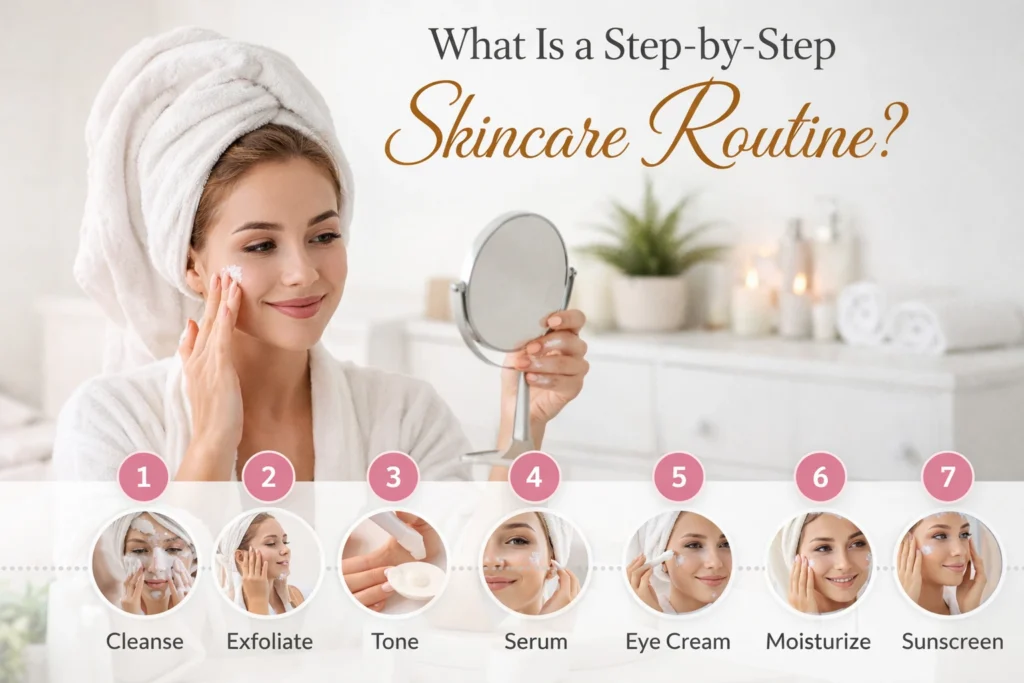
A proper skincare routine doesn’t need 10 steps. In fact, the simpler you keep it, the better it will work for you. Let’s break down the most effective skin care routine steps wise:
1. Cleanser – The Foundation of Healthy Skin
beauty and skincare the first step of any proper healthy skin care regimen is cleansing, which is the most important step. Cleansing your skin removes the accumulation of dirt, oil, sweat, and pollutants that your skin has been exposed to throughout the day. If you do not properly cleanse your face, you will likely suffer from clogged pores, acne, blackheads, and a lack of radiance to your skin.
To clean gently and effectively:
- Cleansing should be done 2 times a day with a gentle, skin-type appropriate cleanser – once in the morning, once before bed.
- Use of harsh soaps or cleansers that remove all natural oils from your skin will contribute to dryness.
- Use non-comedogenic formulas to reduce the chances of breakouts.
Cleansing of the face will not only keep you fresh and healthy, but will also improve the effectiveness of your serums, moisturizers, and other skin-care products.
2. Toner – Balancing and Refreshing
Once you get your skin nice and clean with your facial wash or cleanser, the next step in your skincare regimen is to use a toner. A toner can help restore your skin’s natural pH balance, so it’s more effective at absorbing the benefits of your serums and moisturizers, as well as any treatments you may use on your skin afterward.
Toners are also wonderful at removing any last bits of grime, oil, and makeup that may be left over after you have cleansed your face.
When choosing and applying your toner:
- Look for toners that are alcohol-free to help avoid dryness and irritation.
- Apply toner after you have cleansed your skin, either by using a cotton pad to sweep a little onto your skin or by gently patting it onto your skin.
When you use a toner regularly, you will enhance your entire skincare regimen, so your skin will be in balance, feel refreshed, and be prepared to receive the active ingredients in any other products you may use.
3. Serum – Targeted Treatment
Serum is made with concentrated ingredients that specifically target skin concerns like acne, dullness, uneven texture, pigmentation, and fine lines. Its lightweight texture allows it to absorb quickly into the skin. Because of this, the active ingredients can reach deeper layers compared to heavier creams skin care routine steps –
- Vitamin C – This vitamin helps brighten skin, even out or balance skin tone, and reduce the appearance of dark spots.
- Hyaluronic Acid – This ingredient helps add moisture to the skin, hydrates the skin, and diminishes any signs of dryness.
- Niacinamide – This ingredient helps control excess oiliness, reduce the size of pores & improve the texture of your skin.
Mainly, serum is used to enhance the effectiveness of the products you already use. Over time, the skin becomes more radiant, healthier, and smoother after using a serum.
4. Moisturizer – Locking in Hydration
Moisturisation prevents the skin from becoming dehydrated and helps maintain its smoothness and softness. Moisturisation is important for all skin types, as it helps protect the skin barrier. If you do not use enough moisturiser, your skin may produce excess oil, leading to breakouts. To select a suitable moisturiser, you will want to consider your type of step by step skincare routine for beginners as outlined below:
- Oily / Combination Skin: A gel or light-weight moisturiser would be best to avoid a greasy appearance.
- Dry Skin: A cream or rich moisturiser will provide the deepest hydration available.
- All Skin Types: Non-comedogenic products are recommended to eliminate the risk of clogged pores.
Regular use of a moisturiser will help maintain balanced and nourished skin that is ready to absorb other skin care products and provide your skin with a healthy, illuminated appearance beauty and skincare.
5. Sunscreen – Your Best Anti-Aging Tool
Sunscreens are an essential part of everyone’s skin care regimen. They prevent the damage done to the skin by harmful UV rays, which can lead to premature aging, dark spots, hyperpigmentation, and even skin cancer. Make sure you are using sunblock all year long, and especially on cloudy days or inside. Always:
- Choose an SPF of greater than or equal to 30 to use every day
- Reapply your sunscreen every 2-3 hours while outside
- Choose a broad-spectrum sunscreen, as this will give you protection against both UVA and UVB rays
Morning Skincare Routine: Start Your Day Right

The morning’s skin-care regimen emphasizes safety and prevention. You will create the building blocks for tomorrow by protecting your skin from external aggressors such as ultraviolet radiation, pollution, and free radicals while also keeping it hydrated and fresh throughout the day.
Step-by-step guide to a morning skin care routine:
1: Cleanse – It helps in removing any overnight oils, perspiration, and impurities.
2: Toner (Optional) – Helps restore balance to the skin’s pH as well as to remove any residue left on the skin’s surface.
3: Serum- it is optional; if desired, use a lightweight, hydrating, or brightening serum.
4: Moisturize – Keep your skin soft and hydrated. Use a gel-based moisturizer if you have oily skin, or a cream-based moisturizer if you have dry skin.
5: Sunscreen – Use a minimum of SPF 30 to protect your skin from UVA and UVB rays. Reapply sunscreen every 2 hours for maximum protection if you will be outdoors.
Night Skincare Routine: Repair and Rejuvenate
Night Skincare Routine during the night time, the skin turns itself on for repairs, which assist in providing nutrition and hydration as well as restoring your skin to its natural health. A proper evening routine minimizes the effects of everyday damage and helps prevent breakouts and improve overall skin texture.
Here is a step-by-step guide on how to properly care for your skin at night:
1. Remove makeup – Get rid of makeup and sunscreen using a product that is gentle on your skin.
2. Cleanse – Remove dirt, oil, and pollutants from your face and body.
3. Toner – Optional, but balances skin and preps for treatment stage.
4. Treatment Serum – Use a serum containing Vitamin C, Hyaluronic Acid, or Retinol, depending upon your tolerance (2-3 times a week).
5. Moisturizer- It helps lock in moisturiser and support overnight repair.
Skincare Tips for Oily & Dry Skin
From my personal experience, finding the right balance in skincare can be challenging, especially when dealing with both oily and dry areas. I started following simple best skincare tips for oily and dry skin, like using a gentle cleanser and a lightweight moisturizer that hydrates without making my skin greasy. I also focused on using different products for different areas of my face. Over time, these skincare tips helped improve my skin texture, reduce excess oil, and keep dry patches under control naturally.
1. Oily Skin
Sebum is an oily substance that can make oily skin appear shiny, clog pores, and cause acne. Keeping the skin moisturized and controlling oil production are the two most important steps.
- cleanse twice a day
- avoid heavy creams
- use non-comedogenic products
- don’t skip the moisturizer
2. Dry Skin
Dry skin is usually tight, looks dull, and is often flaky due to dryness. To improve the richness of the skin, it is important to clean it gently, keep it properly hydrated, and protected.
- Use gentle, hydrating cleansers.
- Put on moisturiser right after you wash your face.
- Don’t put hot water on your face.
- Use nourishing oils every now and then.
Diet and Lifestyle for Healthy, Radiant Skin

From my personal experience, following the right Diet & Lifestyle for Healthy Skin can make a visible difference in a short time. I focused on improving my daily nutrition by adding fresh fruits, vegetables, and healthy fats, while also maintaining proper hydration by drinking enough water throughout the day. Changing small habits like reducing junk food, getting enough sleep, and avoiding stress played a major role.
If you are wondering how to get clear skin naturally in 7 days, these simple steps helped me:
- Eat clean and balanced meals rich in vitamins
- Stay hydrated with 8–10 glasses of water daily
- Maintain a consistent skincare routine
- Avoid processed and oily foods
- Get at least 7–8 hours of sleep
- Manage stress through light exercise or meditation
These small but consistent changes can help improve skin clarity and overall health naturally within a week.
Healthy skin is all about healthy habits. It is not about the expensive serums or products. Your diet, hydration, and lifestyle habits have a direct impact on your skin’s texture, glow, and overall health.
Best Healthy Foods for Clear Skin
- Antioxidant Fruits: oranges, berries, kiwi, and pomegranate provide great benefits for your skin by combating free radicals, helping to lower inflammation, and providing your complexion with a natural glow.
- Essential Fatty Acids: Healthy fats such as avocado, almond, some seeds, and olive oil are all high in essential fatty acids, which will help nourish your skin and keep it feeling soft and supple.
- Adequate Hydration: Drinking 7 to 8 glasses of water every day helps clear out any toxins in the body, improves blood circulation, and provides skin with a plump, healthy look.
Having a balanced diet not only nourishes your body but it also makes your skincare routine work better, so you get benefits faster.
Lifestyle Habits That Support Healthy Skin
Diet plays an important role in enhancing your skin health, but your daily habits also influence it. If not taken care of properly, it can make your skin look dull.
- Sleep: a good sleep is very important to have healthy skin, as it helps skin in repair and renew damaged skin cells.
- Stress Management: Meditation, light yoga, and regular exercise effectively help lower stress hormone that triggers acne, inflammation, and early signs of aging.
- Avoid Harmful Habits: Cut back on sugar, alcohol, and smoking, as these can weaken collagen, dehydrate your skin, and speed up the aging process.
Conclusion
beauty and skincare: To have healthy skin, it is important that you take care of your habits. It is not always that you need to spend a lot of money or perform complex routines to achieve beautiful skin. Just be more consistent with your understanding of your skin type.
FAQs
1. What is the best skincare routine for glowing skin at home?
Wash your face first, then use toner. Use serum that treats your skin or helps keep it moisturized. Follow up with a good moisturizer. Finish by applying sunscreen to protect yourself from the sun.
2. How can I get clear skin naturally in 7 days?
Healthy skin is all about your eating habits and how consistent you are with your skincare routine. To keep your skin clear, naturally wash your face twice a day, apply a good-quality moisturiser, and exfoliate lightly from time to time to refresh your skin. Hydration is very important, so drink plenty of water and get 7- 9 hours of restful sleep.
3. What are the best skincare tips for oily and dry skin?
If your skin is oily, you are more likely to get acne because your skin produces more oil. To keep oily skin under control, use light moisturisers, gentle cleansers, and items that don’t clog your pores. But dry skin can’t produce oil on its own; it looks dull, dry, and flaky. To restore your skin’s softness and balance, use rich moisturisers, nourishing oils, and hydrating cleansers that are meant for dry skin.
4. What are natural beauty tips for permanently glowing skin?
To maintain a strong and healthy skin barrier, it is important to cleanse your face gently, stay hydrated, and, most importantly, wear sunscreen. Consume foods that are high in antioxidants and good fats. Manage stress and your sleep routine, as it helps in rejuvenating skin and makes it look fresh and healthier.
5. How to protect my skin from daily environmental damage?
Protect your skin from harmful UV rays by wearing broad-spectrum SPF 30+ sunscreen every day. It also helps shield the skin from blue light from electronic devices. Use antioxidants like Vitamin C to fight free radicals, and ceramides to strengthen the skin barrier. Wash your face twice a day to remove dirt and impurities.
Keep Learning with Reviews and Buy
Looking for simple, reliable health information you can trust? Reviews and Buy offers easy-to-understand wellness guides, honest supplement reviews, and in-depth product comparisons to help you make informed decisions. Explore valuable insights, practical health tips, and trusted recommendations so you can choose the right products with confidence and continue your journey toward a healthier lifestyle.